


KYC process is a mandatory process that each regulated financial institution conducts before onboarding a customer for opening a bank account, issuing insurance policies, and other financial services. A customer goes through the same KYC process repeatedly whenever they apply for a financial service at a new financial institution. CKYC eliminates this repetitive documentation process with centralized records. That makes the KYC process convenient for both individuals and financial institutions. It helps keep unified records and customer record updating and lifecycle management easy. To know more about CKYC, stay until the end.
What is CKYC?
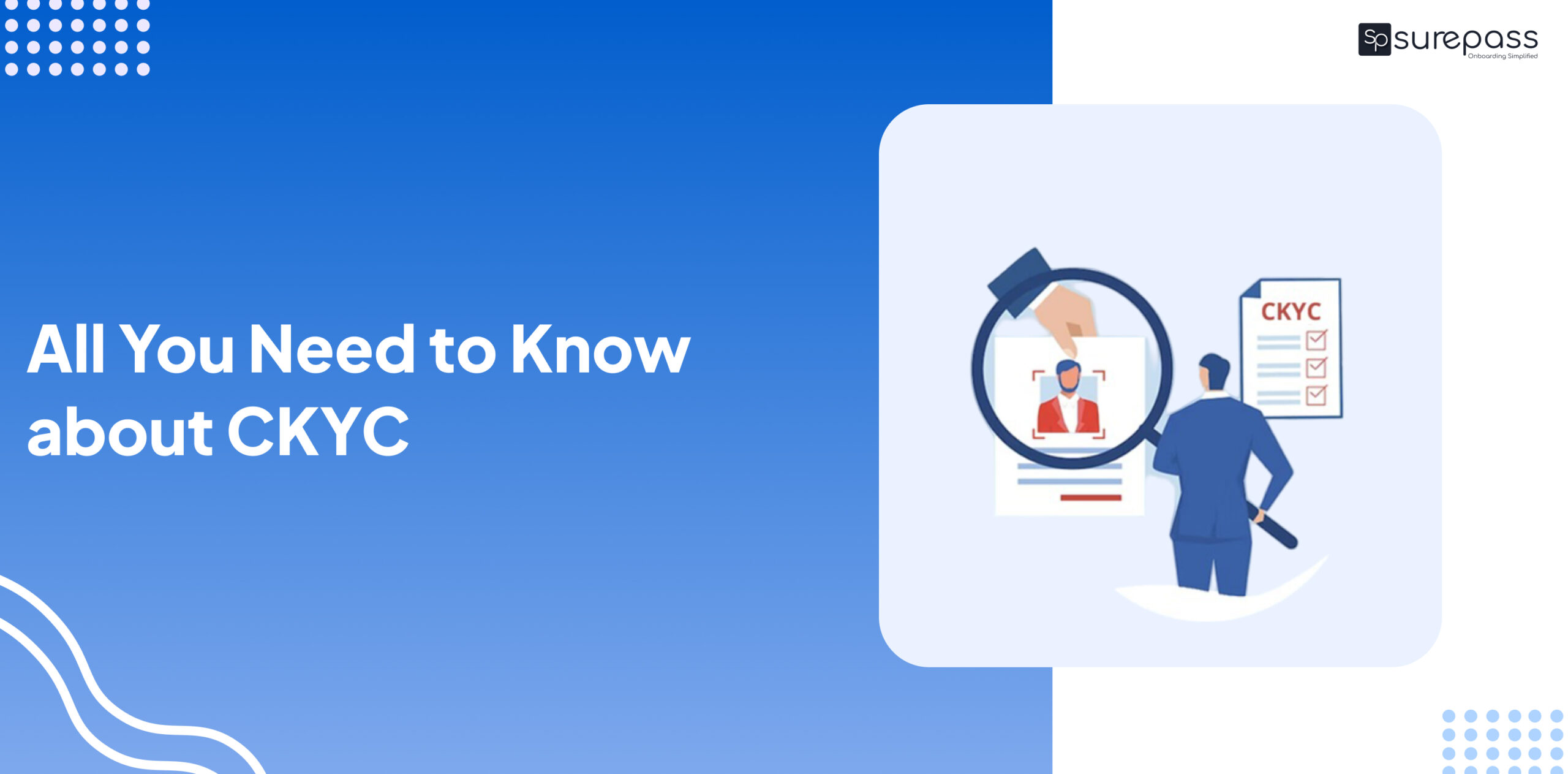
The Central Know Your Customer (CKYC) is a centralized database of KYC data. It unifies KYC compliance across financial institutions in India. It is managed by CERSAI (Central Registry of Securitization Asset Reconstruction and Security Interest). With CKYC, individuals only need to complete their KYC process once.
Banks, mutual fund providers, and other financial institutions can access and verify the KYC details of customers through the CKYC Number. It reduces deduplication and enhances security. It removes the time-consuming repetitive KYC submissions. It saves time and effort.
Objectives of CKYC
CKYC was introduced to make the KYC process simpler, faster, and more consistent across financial institutions. Its main objectives are:
- One Customer, One KYC: Customers need to complete KYC only once, and the same record can be used across eligible financial institutions.
- Standardized KYC: It creates a common KYC process and format for banks, NBFCs, insurance companies, mutual funds, and other regulated entities.
- Faster Onboarding: Since KYC records can be reused, customers can open new accounts and access financial services more quickly.
- Reduced Fraud: A centralized and verified KYC database helps reduce duplicate, fake, and fraudulent identities.
- Better Regulatory Compliance: It helps financial institutions meet KYC and Anti-Money Laundering (AML) requirements more efficiently.
- Secure Centralized Repository: All verified KYC records are stored securely in a central database managed by CERSAI, making them easier to access and update when required.
Why is CKYC Important?
It simplifies the customer verification process both for businesses and individuals:
- One-Time Process: You need to complete the KYC process only once with the financial institution regulated by SEBI, RBI, IRDAI, or PFRDA.
- Simplify the Onboarding Process: You don’t need to submit physical documents; instead, you can share your CKYC number to get details from CKYCRR. It speeds up the bank account opening process, buying insurance, and securing loans.
- Enhance Security: The Central Records Repository stores your information securely and reduces the risk of document fraud.
- Cost-Effective: It eliminates the need for paper-based documentation, which reduces the cost of document handling.
Automate your KYC Process & Reduce Fraud!
We have helped 3000+ companies in reducing Fraud by 95%
Institutions Eligible to Register Customers for CKYC
Banks and financial institutions regulated by SEBI, RBI, IRDAI, and PFRDA can register your KYC details with CKYC. It is the responsibility of these banks to accurately update the KYC data of the customer to CKYC, whenever the customer opens:
- Open a bank account.
- Create a Demat account.
- Purchase an insurance policy.
- Make investments in mutual funds
Difference Between KYC and CKYC
These are the main differences between KYC and CKYC:
| Basis | KYC (Know Your Customer) | CKYC (Central KYC) |
| Meaning | It is a process of verifying identity for each institution | A Centralised KYC System where records are stored in one place |
| Full Form | Know Your Customer | Central Know Your Customer |
| Managed by | Individual banks, NBFCs, or financial institutions | CERSAI |
| Requirement | You need to complete KYC every time for a different institution | Done once and can be used across institutions |
| Reusability | Not reusable | Fully Reusable using CKYC Number |
| Document Submission | Required Multiple Times | Required once |
| KYC Number | No unique number to access the KYC record | A 14-digit CKYC Number assigned |
| Data Storage | Stored by Individual Bank | Stored in CKYCRR Database |
How Does CKYC Work?
Here is how CKYC works:
Step 1: Customer Submits Documents
The customer submits basic KYC documents, including identity proof, address proof, PAN card, and a recent photograph, to a bank or other financial institution.
Step 2: Institution Verifies the Details
The institution verifies the submitted documents, checks the original information, and performs customer due diligence and AML checks before approving the KYC.
Step 3: Upload to CKYCRR
After verification, the institution uploads the customer’s KYC details, documents, photograph, and PAN information to the Central KYC Records Registry (CKYCRR).
Step 4: KIN Generation
Once the records are accepted, CKYCRR generates a unique 14-digit KYC Identification Number (KIN) for the customer. This number serves as a permanent CKYC reference.
Step 5: Reuse of CKYC
When opening an account with another financial institution, the customer can simply provide the KIN. The institution retrieves the existing CKYC record from CKYCRR, reducing the need to submit the same documents again.
What is a CKYC Number?
The CKYC Number is a unique 14-digit identification number. Customers get this number when a financial institution updates KYC data on the CKYC Records Registry. This registry makes the KYC data centralized and accessible to financial institutions. It reduces the resubmission of documentation and KYC for different financial institutions.
Documents Required for CKYC
CKYC relies on Officially Valid Documents (OVDs) to establish identity and address. Commonly accepted documents include:
Proof of Identity: PAN card, Aadhaar, Voter ID, Passport, Driving Licence, or NREGA job card.
Proof of Address: Aadhaar, Passport, Voter ID, Driving Licence, recent utility bills (generally not older than a couple of months), recent bank statements, or a registered rent agreement.
Additional requirements: A recent passport-size photograph and the customer’s signature.
Since Aadhaar and Passport can serve as both identity and address proof, a single document can sometimes satisfy multiple requirements — one more way CKYC reduces paperwork.
How to Check Your CKYC Number and Status
Once your CKYC record is created, you can look up your KIN and verify your status through several channels:
- CKYC portal: Use the “Fetch your CKYC” or CKYC search feature on the official CERSAI-linked portal, typically with PAN-based verification.
- Net banking: Many banks display CKYC details within the profile or KYC section of their internet banking dashboards.
- DigiLocker: Where supported, the CKYC card can be retrieved directly through the DigiLocker app.
- Through your institution: Your bank, insurer, or mutual fund provider can share your KIN, since they generated or accessed it during onboarding.
- Offline options: Reviewing past communications from your bank or visiting a branch with valid ID can also help you recover your CKYC number.
Keeping your CKYC record accurate matters. If your address, contact details, or documents change, ask a reporting institution to update the record so that every institution drawing on it works from current information.
Conclusion
In India, CKYC is a useful and significant tool for controlling financial activities. It makes it easier to confirm clients’ identities and keeps track of and updates their information, which lowers the number of fraud and money laundering incidents. Therefore, firms may improve their customer experience, compliance, and transparency by putting into practice and adhering to CKYC rules.
Organizations may guarantee that their services are safe, dependable, and comply with laws by adhering to these criteria.
FAQs
Ques: How do I Find my CKYC No.?
Ans: Visit any official portal that offers CKYC number check services like Karvy KRA, CVL KRA, CKYC India, etc.
Ques: How to get 14 digit CKYC Number online?
Ans: Complete the KYC process with a bank, when the bank uploads your KYC data, you will receive the 14-digit CKYC number online.
Ques: Is CKYC Mandatory for Everyone?
Ans: Yes, every regulated bank and financial institution must register customers under the CKYC.
Ques: What is the Central KYC Registry?
Ans: The Central KYC Registry (CKYC) is a centralized database of customer KYC records managed by CERSAI.
Ques: Can you do CKYC online?
Ans: Yes, you can complete the KYC process online at a registered financial institution portal.
Ques: What organizations can register customers for CKYC?
Ans: All the financial institutions regulated by RBI, SEBI, PFRDA, and IRDAI.
Automate your KYC Process & Reduce Fraud!
We have helped 3000+ companies in reducing Fraud by 95%