We live in the technology era where data scraping and image editing are easy processes. If you are not careful about your data you will become a victim of document fraud. You can also lose your identity to a fraud.
Lenders and loan officers are facing challenges in approving loans to individuals due to the rise in cases of fake bank statements. They need to be extra careful in checking the legitimacy of documents provided by the people.
If you are worried about fake documents, you are not the only one. One mistake can make you lose money and reputation. However, with proper fraud detection tools, you can prevent losses related to forged documents.
What Is Document Fraud?
Document fraud refers to creating, manipulating or using fake or illegitimate documents to fool others. The act of document forgeries includes minor changes to identity cards to falsifying financial records or academic credentials.
This alteration can be used for various illegal activities, including identity theft, human trafficking and terrorism. You don’t even know when document forgery can put you at risk of significant financial losses, reputational damage, security breaches and non-compliance with industry regulations like KYC and AML rules.
The prime targets of the fraud are financial institutions, Government agencies, and other entities to gain access to resources.
Types Of Document Fraud
Criminals create different kinds of fake documents, each needing specific detection methods. Below we have mentioned fraud types you should know to protect you and your business.
Document Forgery
Document forgery simply means creating a fake documents from scratch or manipulating the original document. Document forgery refers to manipulating genuine documents like changing names or numbers. Now fraudsters are using technology to edit images which makes it difficult to detect.
Identity Theft
Identity theft occurs when someone tries to steal someone others identity by using their details and documents like ID numbers. Frauds can use someone’s identity to open a bank account, purchase vehicles or start a business. They can use someone another credential to create social media profiles using their name, photos and personal information. Which makes identity verification crucial.
Image Fraud
Image fraud is like stealing someone’s other picture. For instance, if someone loses their Waller and a scammer finds it. They can use their documents for their wicked reasons.
Invoice Fraud
This occurs when an employee pretends to be a vendor and creates a fake invoice. The company then pays the invoice, unknowingly transferring funds directly to the employee’s account.
Receipt Fraud
Receipt fraud involves altering the original receipt creating up, or submitting the same receipts more than once. This kind of practice leads to fake expense reimbursements. These frauds are commonly found everywhere and decrease the profit of businesses.
Loan or Mortgage fraud
Loan or mortgage fraud is when a bank submits fake documents, like bank statements, tax returns, or proper appraisals, to get loans and mortgages. This can lead to financial losses for you as a lender and create compliance issues.
Insurance Fraud
Insurance fraud occurs when people fake claims and application forms to receive money. These claims include fake medical records, property damage, and other financial losses. These kinds of activities cause financial losses to the insurance company.
Most Targeted Identity Documents
- Aadhaar Card: An Aadhaar Card is issued by a unique identification number authority of India (UIDAI). It is issued to all residents of India including infants. This card contains 12-digit unique identification numbers based on biometric and demographic data. It is widely used as proof of identity and proof of address. This card can be used for various purposes such as opening a bank account, getting a mobile phone SIM card, etc.
- Voter ID: The Indian Voter ID is proof of identity card the election commission give to 18 or older Indian residents.
- Driver’s License: A Driver’s License proves that the individual has passed the driving test and can drive a vehicle on the road. It contains information like the ID Card holder’s name, date of birth, address, and unique license number. It is also used as proof of identity for verifying the legitimacy of the person, age and address.
- PAN Card: A PAN card is a Permanent Account Number. It is issued to Indian residents, companies and NRIs. This card contains 10-character alphanumeric identifiers. It is required for transactions, receiving a taxable salary, bank account opening, etc. It is an important document used for applying for credit cards and loans.
- Passport: Passport is issued by the Ministry of External Affairs Of India. It is an official travel document for international travel. It contains information such as date of birth, holder’s name, signature and photograph. It is a must document to travel abroad. Passports can also be used as proof of identity and proof of address.
Common Document Fraud Cases
Here are the most common fake ID Card cases found in daily life.
- Altered ID: In this kind of Scam small changes are made in the genuine ID. For example, a driver’s license has all the details with a minor change of Date of birth.
- Borrowed ID: This is the most common type of fake ID proof case, in which someone used someone else with or without their consent.
- Stolen ID: In this case, fraud stole someone else’s ID card without making any changes. For example, criminals use the PAN card of an individual to sign in to the app without permission.
- Imagined ID: Here, fraud creates a new fake document used as ID, this kind of case usually occurs for signing in-app.
- Duplicate ID: An exact copy of someone else’s ID. For example, a fake driver’s license is used to register on an app.
How to Detect Document Fraud
There are two approaches: manual and AI-based.
Manual verification looks simple, but as forgery techniques improve, tampering is hard to spot by eye. It is also error-prone and slow.
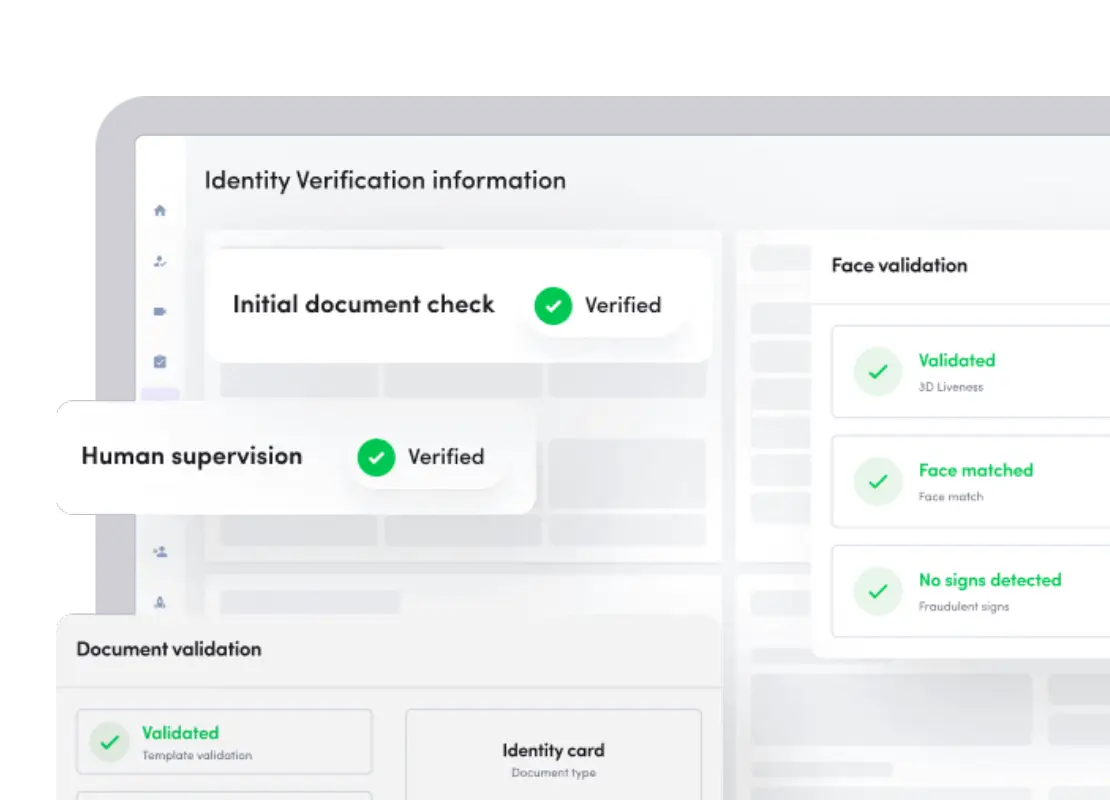
Technology-based verification uses OCR, Intelligent Document Processing, and AI to catch what people miss.
Key Checks
- Duplicate detection: Prevents paying for the same service or receipt twice.
- Digital alteration checks: Detect whether the document was edited in software like Photoshop.
- Database comparison: Use OCR and a document verification API to match the document against the original in an authentic database.
- Format, fonts, and colours: Every document type has a standard layout. Inaccurate fonts, colours, or formats are red flags.
- Seals, watermarks, logos, and stamps: Check them carefully.
- Details and consistency: Look at dates, signatures, and numbers. Any irregularity may indicate tampering.
Physical Signs of a Fake ID
- Creased or damaged edges
- Distorted or blurry images
- Edited or Photoshopped photos
- Misplaced laser perforation
- Missing or incorrect UV imagery
- Low-quality lamination
Use Verification APIs
Because advanced forgeries can pass manual checks, use specialised tools:
- Aadhaar Verification API to identify fake Aadhaar cards
- Voter Verification API to detect fake voter ID numbers or cards
- PAN Verification API to identify fake PAN cards
- Passport Verification API to detect forged passports
Tips To Prevent Document Fraud
- Educate your employees on how to detect fraud related to documents.
- Utilize technology such as fraud document detection API and OCR.
- Be aware of the latest fraud tactics and security advancements.
- Keep sensitive documents safe and secure with digital signatures online.
- Always verify the document details with the original one.
- Use Automation for large document fraud verification
FAQs
Ques: How can financial institutions distinguish genuine bank statements from synthetically generated financial documents?
Ans: Financial institution should check the transaction histories, account details, opening and closing balances, and formatting consistency.
Ques: Can digital signature validation establish whether an identity document has been tampered with?
Ans: Digital signature verification helps check whether the digitally signed document content has changed since it was signed and whether the signing certificate is trusted and valid. However, it does not automatically prove the identity of an unsigned scanned copy.
Ques: What is the role of metadata analysis and image forensics in detecting document manipulation?
Ans: Metadata analysis examines information such as file creation dates, modification timestamps, software details, and document properties to identify flagging.
Automate your KYC Process & reduce Fraud!
We have helped 200+ companies in reducing Fraud by 95%