


Key Takeaways
- Verification Time: Digital CPV completes verification in minutes, while Physical CPV typically takes 1–5 days.
- Verification Method: Digital CPV uses real-time digital signals such as GPS, mobile devices, and address verification. Physical CPV requires an on-site field visit.
- Cost: Digital CPV reduces operational costs by eliminating most travel and manual verification expenses.
- Best For: Digital CPV is ideal for high-volume digital onboarding, while Physical CPV is better suited for high-value or high-risk verification cases.
Whether you are a bank, NBFC, fintech company, insurance provider, or e-commerce business. Contact point verification is essential before approving a loan or financial service.
Before digitalization, these businesses relied on physical contact point verification. Where the agent visited the customer’s address. But businesses are integrating Digital Contact verification for quick verification and cost-effectiveness.
In this blog, we’ll compare Digital CPV vs Physical CPV, their differences, and help you decide which option is better for your business.
What Is Physical CPV?
Physical Contact Point Verification (CPV) is a traditional verification process where a field executive visits the customer’s residential or business address to verify whether the information shared during onboarding.
The executive:
- Visit the customer’s address.
- Verify the location physically.
- Meet the customer or neighbors.
- Capture photographs.
- Submit a verification report.
Physical CPV has been widely used by banks and lending institutions for years, especially for high-value loans. However, the process usually takes 1–5 days, depending on location and agent availability.
Automate your KYC Process & Reduce Fraud!
We have helped 3000+ companies in reducing Fraud by 95%
What is Digital CPV?
Digital Contact Point Verification (Digital CPV) is an automated verification process that verifies customer contact points without sending a field agent. Instead of physical visits, businesses use digital contact point verification solutions to confirm whether customer information is genuine.
A Digital CPV solution can verify:
- Mobile numbers
- Address verification
- GPS location
- Device information
- IP address
- Identity Verification
- Address-location match
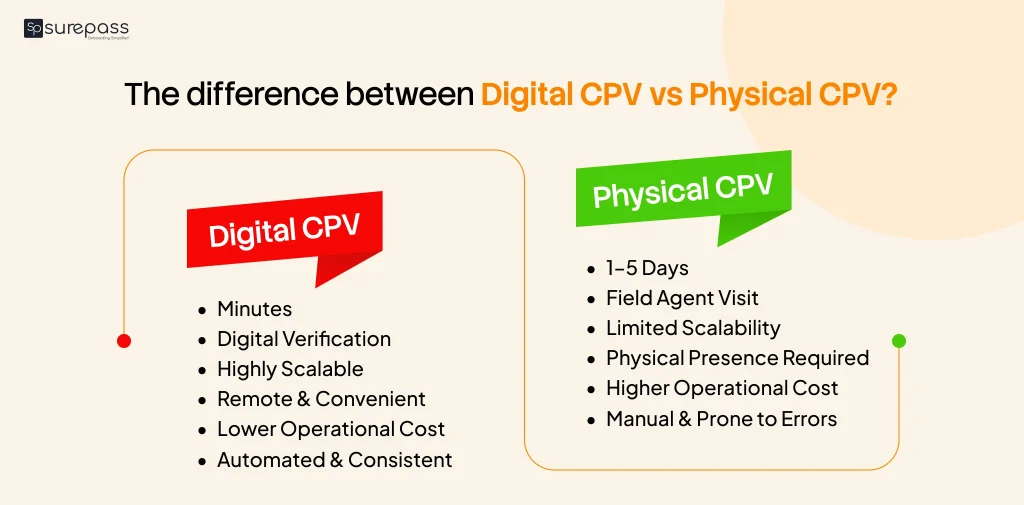
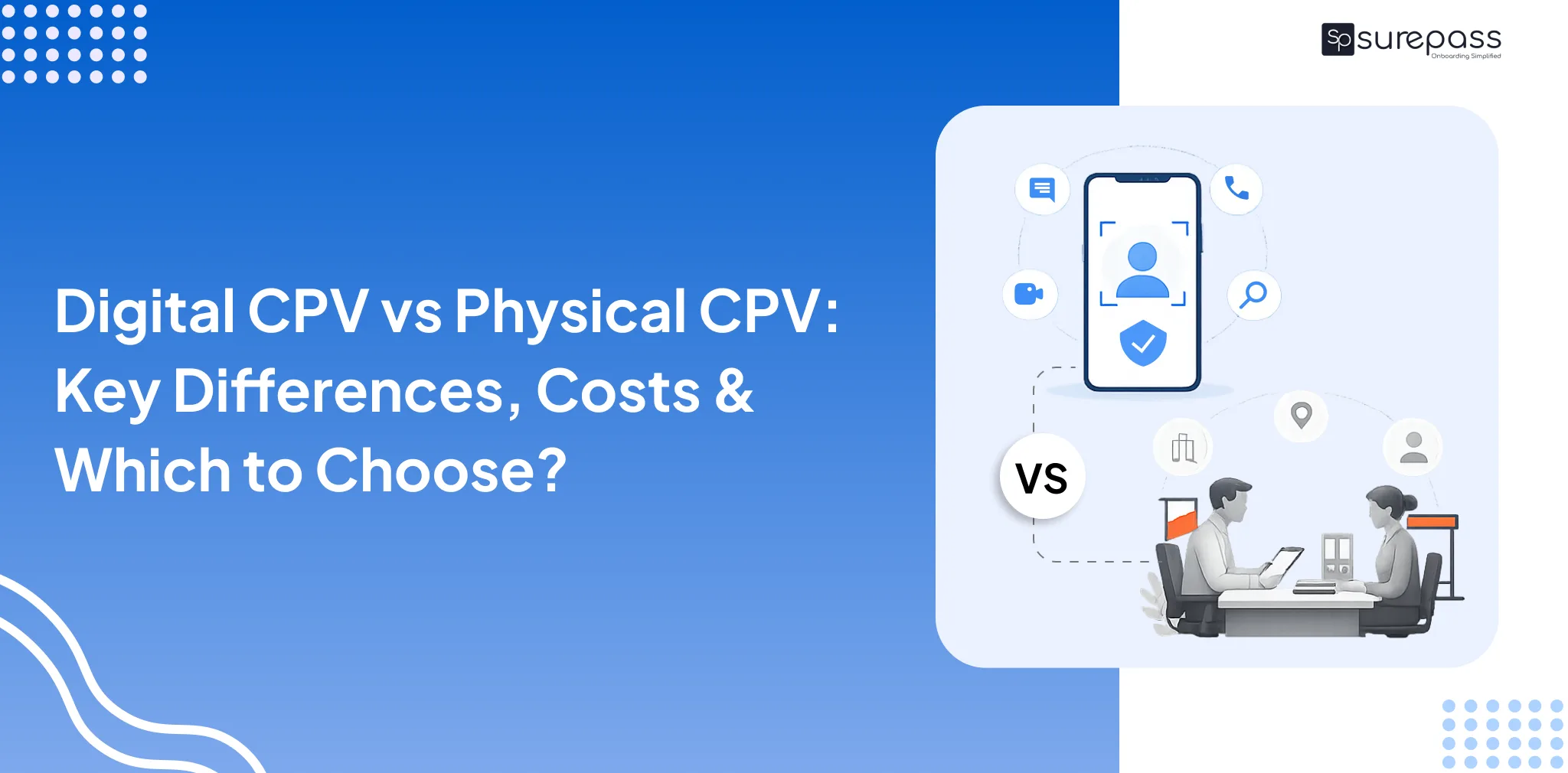
What is the difference between Digital CPV vs Physical CPV?
There are many differences between CPV and Digital CPV:
- Verification Speed: The Digital CPV process takes a few minutes to verify the contact points. Where physical CPV takes 1 to 5 days for verification.
- Verification Method: In the digital contact verification business, use a digital solution for verification. In physical CPV, an agent is sent to the location.
- Scalability: Businesses can verify thousands of verifications automatically, whereas large-scale businesses need to hire many people.
- Customer Experience: Digital CPV is faster and more convenient for the customer, whereas physical CPV requires the customer’s physical presence and may have delays.
What are the Advantages of Digital CPV vs. physical CPV?
Digital CPV offers the following benefits to the business:
Faster Customer Onboarding
Customers no longer have to wait days for a field visit. Verification happens almost instantly, allowing businesses to approve customers much faster. This improves conversion rates and customer satisfaction.
Lower Verification Costs
Physical verification requires:
- Travel expenses
- Field agents
- Manual coordination
- Documentation
Digital CPV eliminates most of these costs through automation. Businesses can reduce operational expenses while increasing verification volume.
Better Fraud Detection
Modern fraud is no longer limited to fake addresses.
Fraudsters often use:
- Fake phone numbers.
- Virtual locations.
- Incorrect addresses.
- Device manipulation.
- Identity mismatches.
Digital CPV analyzes multiple data points together, making it easier to identify suspicious applications and prevent fraud.
Improved Customer Experience
Now customers want quick services; waiting several days for address verification creates delays during onboarding. Digital CPV offers a faster and smoother experience by completing verification without requiring customers to schedule or attend a physical visit.
Easy to Scale
Digital CPV can verify a large number of customers simultaneously without increasing operational workload. This makes it ideal for fast-growing businesses.
Does the business still need CPV?
Although Digital CPV is becoming the preferred choice, Physical CPV is required in:
- High-value loan verification
- Sensitive financial investigations
- Regulatory requirements
- Cases requiring physical evidence
- Risk-based verification for exceptional cases
Many organizations now use Physical CPV only when digital verification flags suspicious applications.
Which One Is Better between Digital CPV vs Physical CPV?
For most businesses, Digital CPV is the better choice. It is:
- Faster
- More affordable
- Easier to scale
- More customer-friendly
- Better suited for digital onboarding
A digital-first verification solution helps businesses onboard genuine customers quickly while focusing on manual verification only where it is truly needed.
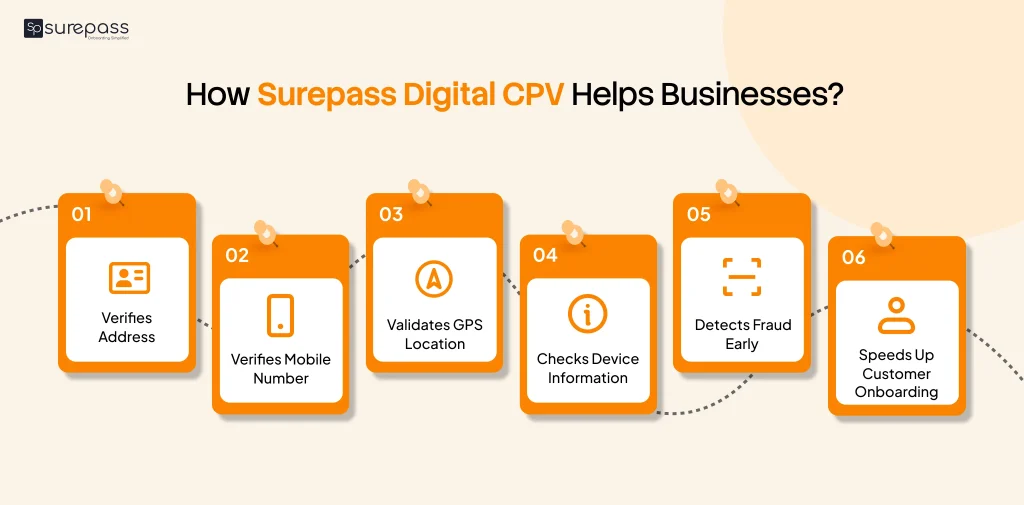
How Surepass Digital CPV Helps Businesses?
Surepass Digital Contact Point Verification API helps businesses verify customer contact details quickly without relying on physical field visits. The solution helps verify:
- Customer address
- Mobile number
- GPS location
- Device information
- Identity consistency
- Contact point authenticity
With real-time verification, businesses can:
- Speed up customer onboarding
- Reduce operational costs
- Minimize manual verification
- Detect suspicious applications early
- Improve verification accuracy
- Build a smoother customer experience
Whether you’re a bank, NBFC, fintech company, insurance provider, or lending platform, Surepass Digital CPV helps make customer verification faster, smarter, and more reliable.
Conclusion
Choosing between Digital CPV vs Physical CPV depends on your business needs. As customer onboarding becomes more digital, businesses need verification methods that are fast, scalable, and cost-effective.
While Physical CPV still has value for select high-risk cases, Digital CPV offers the speed, automation, and efficiency that modern businesses require. If you’re looking to reduce verification costs, improve onboarding speed, and strengthen fraud prevention, adopting a Digital CPV solution is the smarter long-term investment.
FAQs
Ques: What is the difference between Digital CPV and Physical CPV?
Ans: The main difference between Digital CPV vs Physical CPV: how customer details are verified. Digital CPV uses automated digital checks to verify contact points such as mobile numbers, addresses, GPS location, and device information in real time. Physical CPV requires a field executive to visit the customer’s address and manually verify the information. Digital CPV is faster, more scalable, and cost-effective, while Physical CPV is typically used for high-risk or high-value verification cases.
Ques: Which is better Digital CPV or Physical CPV?
Ans: For most businesses, Digital CPV is the better option because it offers faster verification, lower operational costs, and a better customer experience. Physical CPV is still useful for specific scenarios, such as high-value loans or regulatory requirements, but Digital CPV is ideal for day-to-day customer onboarding.
Ques: What is Digital Contact Point Verification?
Ans: Digital Contact Point Verification (Digital CPV) is a technology-driven process that verifies customer contact details without requiring a physical visit. It checks information like addresses, mobile numbers, GPS location, and other digital signals to help businesses verify customers quickly and reduce fraud.
Ques: Why are businesses moving from Physical CPV to Digital CPV?
Ans: Businesses are adopting Digital CPV because it reduces verification time from days to minutes, lowers operational costs, improves onboarding speed, and helps detect fraudulent applications more effectively. It also scales easily as customer volumes grow.
Ques: Does Digital CPV replace Physical CPV completely?
Ans: No, organizations still use Physical CPV for high-risk applications, large loan amounts, or cases where regulations require an on-site verification.
Automate your KYC Process & Reduce Fraud!
We have helped 3000+ companies in reducing Fraud by 95%