


Banks verify customer details before offering loans or opening bank accounts to confirm that the information provided is genuine and accurate. It helps in evaluating the financial stability of the customer and reduces default risk. The contact point verification, or CPV, is the process that confirms that the information provided by the customer is genuine. Here in this blog, you will learn about CPV in detail.
What is CPV in Banking?
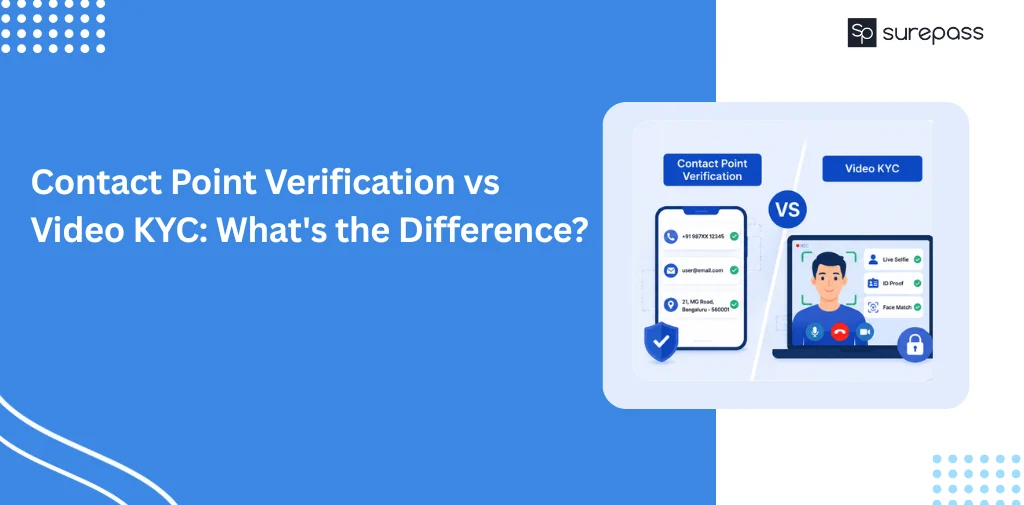
Contact Point Verification is a process used to verify the contact information provided by individuals or organizations. It includes verifying phone numbers, email addresses, and physical addresses to confirm that they are accurate and up to date. The primary objective of CPV is to prevent fraud. It is done when a customer applies for services like loans, credit cards, or high-value accounts. A bank representative visits the given address to confirm that the information is correct, check documents, and sometimes meet the customer in person.
Why CPV is Important in Banking?
Contact Point Verification is necessary for businesses to confirm accuracy, security, and compliance.
- Prevent Fraud: CPV confirms that the customer’s residential or office address is correct. In-person verification reduces the risk that banks can detect fake identities or fraudulent applications before approving loans, credit cards, or high-value accounts.
- Builds Customer Trust: Strict verification confirms the authenticity of the verification processes, ensuring that customers are genuine. Their financial institutions are secure and serious about protecting their money.
- Reduce Risk of Defaults: Verify the borrower’s identity and locations, and banks can make informed lending decisions. It lowers the chance of lending to people who might default.
- Meet Regulatory Requirements: Banking Regulations in India require proper KYC (Know Your Customer) and due diligence before providing service.
- Ensures Accurate Records: It confirms that the details in the bank’s system match real-world information. It helps maintain a clean and reliable customer database.
How CPV Works: Step-by-Step Process
- Customer Applies for a Banking Service: When the process begins, customers apply for a loan, credit card, or high-value account. The bank collects personal, residential, and work details during the application.
- Bank Assigns a Verification Request: The bank sends the details to the in-house verification team or an authorized agency of CPV.
- Verification Officer Visits the Contact Point: A trained officer physically visits the provided address, including the customer’s home, workplace, or both. It is done to confirm that the address exists and is linked to the applicant.
- Document Check and Cross-Verification: Document checks such as ID proof, address proof, or employment proof.
- Report Preparation: The officer records observations like address accuracy, living conditions, and office presence into a report.
- Submission to the Bank: The verification report is submitted back to the bank for review
Types of Contact Point Verification
Residential Verification
It confirms that the customer lives at the provided address in the application. A verification officer visits the home to check the address proof documents. You will meet the applicant to confirm that the details match what was shared with the bank. It is important for delivering official communication and for tracking customers.
Office/Business Verification
This step confirms the customer’s place of employment or business operations. A verification officer visits the workplace to check if the applicant is genuinely employed or running a business at the stated location. It helps the bank evaluate the financial stability.
Automate your KYC Process & Reduce Fraud!
We have helped 3000+ companies in reducing Fraud by 95%
Methods to Conduct CPV
Financial institutions can conduct CPV into 2 mode: Physical and Digital:
Physical CPV
Physical Contact Point Verification (CPV) is a traditional verification process where a field executive visits the customer’s residential or business address to verify whether the information shared during onboarding.
The executive:
- Visit the customer’s address.
- Verify the location physically.
- Meet the customer or neighbors.
- Capture photographs.
- Submit a verification report.
Digital CPV
Digital Contact Point Verification (Digital CPV) is an automated verification process that verifies customer contact points without sending a field agent. Instead of physical visits, businesses use digital contact point verification solutions to confirm whether customer information is genuine.
- Mobile numbers
- Address verification
- GPS location
- Device information
- IP address
- Identity Verification
- Address-location match
When CPV is need?
Loan Applications
When a customer applies for a loan, the bank needs to be sure they are genuine and financially reliable. It helps confirm the borrower’s address, workplace, and personal details. Physical verification builds trust and reduces the chances.
Credit Card Issuance
Before issuing a credit card, banks conduct CPV to verify the applicant’s contact information and employment details.
High Value Transactions
For large transactions or opening high-value accounts, CPV helps banks follow regulatory requirements. With physical verification, the customer’s banks can confirm the person’s identity, prevent money laundering, and maintain accurate records.
What Does the RBI KYC Master Direction Actually Say?
The rulebook here is the Master Direction on KYC, dated February 25, 2016, which the RBI keeps amending, most recently in 2025. It applies to banks, NBFCs, and other regulated entities (REs).
For address verification, the Direction relies on a key standard: positive confirmation. It means the RE must actively confirm that the declared address is real, not just file the customer’s word. The RBI makes this compulsory in two specific situations.
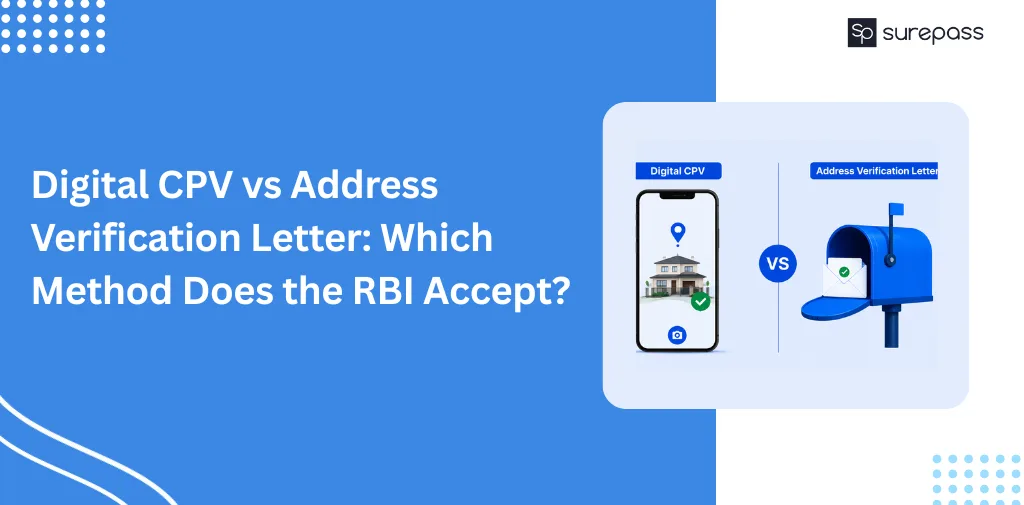
- Non-face-to-face onboarding (Paragraph 40(c)): If you onboard a customer remotely through digital channels, RBI requires you to verify the current address through positive confirmation before the customer starts operating the account. The Direction lists the acceptable means as an address verification letter, contact point verification, deliverables, and similar methods. Deliverables mean items like a cheque book or debit card successfully delivered to that address.
- Address change during periodic KYC updating (Paragraph 38(a)(2)): When a customer reports a new address at re-KYC, the RE takes a self-declaration and must verify that address through positive confirmation within two months, again by means such as an address verification letter, contact point verification, or deliverables.
Challenges in Contact Point Verification
These are issues that are faced in contact point verification:
Time-consuming Process if requires physical verification
It involves physical visits to the residential address of the customer, which can take several days. This may delay loan approvals or account openings.
Remote or Hard to Reach Locations
Customers in rural or remote areas are difficult to verify quickly due to network issue, distance and lack of transport.
Manual Errors
Handwritten reports, incomplete details, or incorrect information can affect the accuracy of verification.
Fraud Risks
Some fraudsters may provide fake references or temporary addresses that look genuine at the time of visit, but later cause losses.
How Does Surepass Digital CPV Help Businesses?
Surepass Digital Contact Point Verification API helps businesses verify customer contact details quickly without relying on physical field visits. The solution helps verify:
- Customer address
- Mobile number
- GPS location
- Device information
- Identity consistency
- Contact point authenticity
With real-time verification, businesses can:
- Speed up customer onboarding
- Reduce operational costs
- Minimize manual verification
- Detect suspicious applications early
- Improve verification accuracy
- Build a smoother customer experience
Whether you’re a bank, NBFC, fintech company, insurance provider, or lending platform, Surepass Digital CPV helps make customer verification faster, smarter, and more reliable.
Conclusion
Customer verification is an essential step in banking. It confirms that customer details are genuine and accurate. It helps banks prevent fraud, reduce the risk of defaults, and follow the regulatory requirements. Banks can make more secure and informed decisions by verifying customers’ residential and office addresses.
FAQs
Ques: What is the full form of CPV?
Ans: In banking, CPV is Contact Point Verification.
Ques: Why is CPV important?
Ans: It helps confirm that verifies customer legitimacy, reduces fraud, and financial losses.
Ques: What is meant by Contact Point Verification?
Ans: It is a process of physically or digitally verifying a customer’s provided details, like address, workplace, contact number, etc.
Ques: What documents are checked during CPV?
Ans: Documents such as address proof, identity proof, and employment proof, etc.
Ques: How long does CPV take?
Ans: It typically takes 2 to 3 days.
Automate your KYC Process & Reduce Fraud!
We have helped 3000+ companies in reducing Fraud by 95%