


Identity verification is essential for any business or service provider. It helps prevent fraud, identity theft, and terrorist funding. Currently, fraudsters are using various methods to steal other people’s identities for illegal purposes. Online platforms are increasing to reach more customers. However, the rise in platforms has increased the risk of digital identity fraud. According to reports, every year, millions of cases are registered. That’s why digital identity verification has become a crucial process for businesses. Here, you will learn about digital identity verification, how it works, its importance, and the right solution provider.
What is Digital Identity Verification?
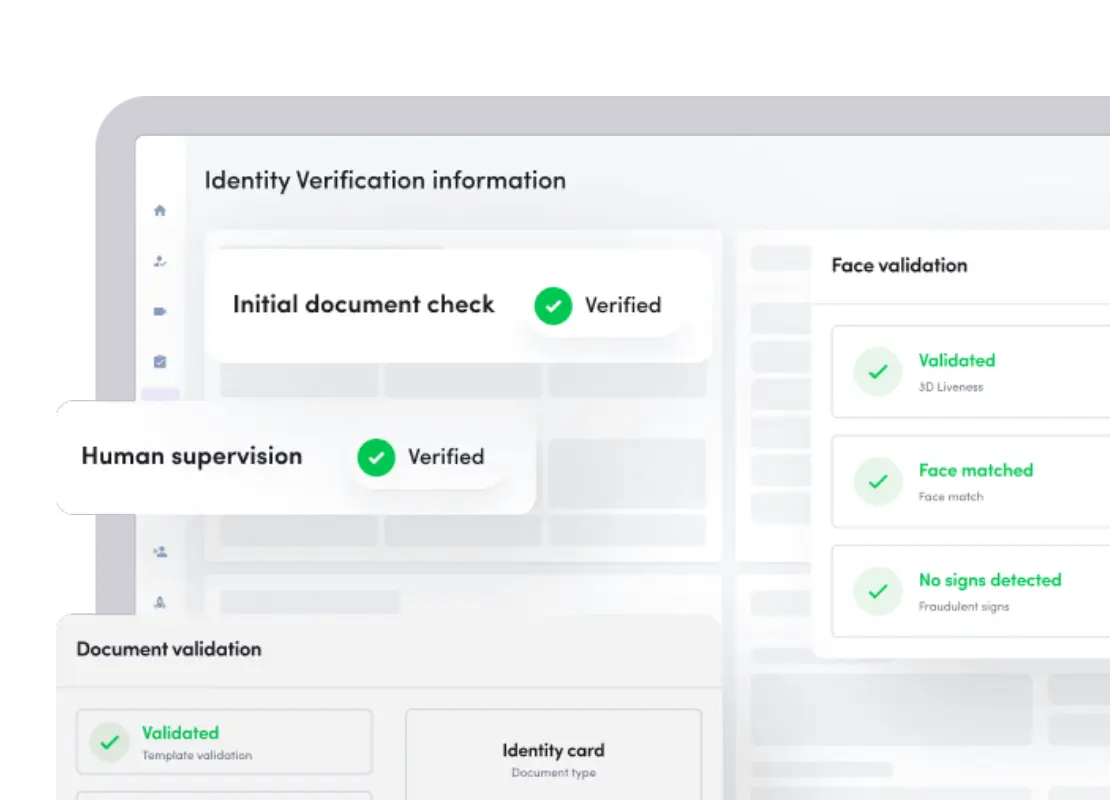
The digital identity verification process checks a person’s legitimacy. It proves that a person is real and not a fraudster or someone who is using another’s identity. This process verifies a person’s identity through biometric verification, document verification, and liveness check, etc.
Automate your KYC Process & Reduce Fraud!
We have helped 3000+ companies in reducing Fraud by 95%
How Digital Identity Verification Works?
It is a multi-step verification process. Here is how it works:
Step 1: User Data Collection: Basic information about the users is taken into account, including the name, DOB, address, and contact details.
Step 2: Document Verification: The users are required to submit a valid government ID (such as a passport, driver’s licence, or Aadhaar card). The system uses OCR (Optical Character Recognition) to collect data and verify authenticity, tampering, or fraud.
Step 3: Biometric Verification: User captures a photo or a short video. Facial recognition is used to match live images with an uploaded image of a government ID. Liveness detection confirms an individual’s presence or whether they are using a fake ID or a deepfake.
Types of Digital Identity Verification
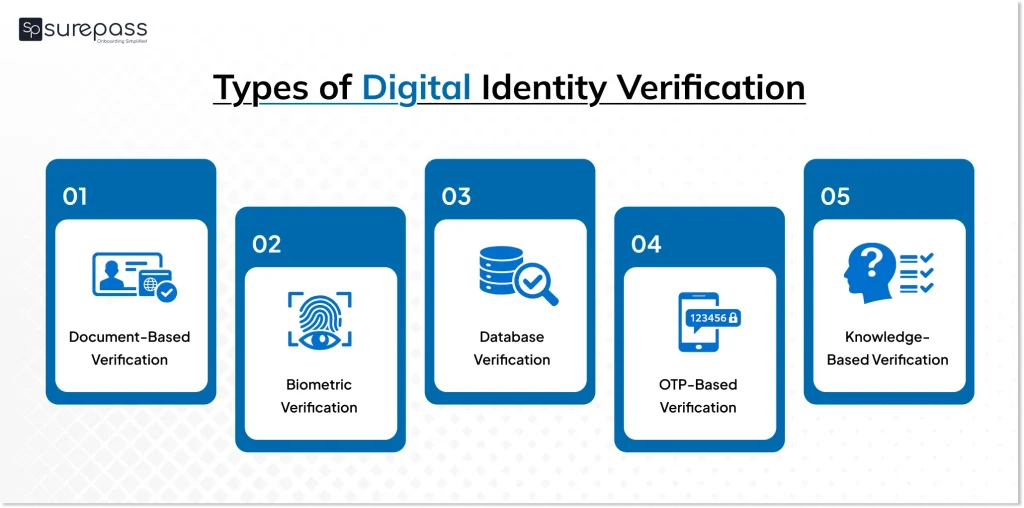
Digital Identity can be verified through the following methods:
- Document-Based Identity Verification: In document-based online identity verification, businesses verify a person’s identity through a passport, a driver’s license, a national ID card, an Aadhaar Card, etc. Users upload the image of their ID document, and after that, the document is verified against the government database.
- Biometric Verification: Biometric verification uses unique physical traits like facial recognition, fingerprints, or iris scans. It includes liveness detection and confirms that the user is physically present.
- Database Verification: User verification is cross-verified against the trusted database, such as government records, credit bureaus, or telecom data.
- OTP Based Verification: A one-time password is sent to the user’s registered mobile number or email to confirm ownership.
- Knowledge-Based Verification: In this process, many questions are asked to confirm the legitimacy.
- Device and Behavioural Verification: This method analyses user behaviour and device signals such as IP address, typing patterns, and login habits to detect fraud.
- Video KYC Verification: It is another form of digital identity verification process, where the user is verified during a live video call through real-time document verification and liveness check.
- Two Factor/Multi Factor Authentication: It combines two or more verification methods, such as password, OTP, or biometric, and device check.
Why is Digital Identity Verification Important?
Identity verification is essential for any business:
- Security and prevention of fraud: This helps to identify fraudulent activity through fake identities or by creating fake accounts.
- Compliance: KYC or digital identity verification is a mandatory process. It confirms that you are compliant with the KYC and AML regulations.
- Reduce Operational Inefficiency: It replaces the paper-based and manual verification procedure.
Digital Identity Verification vs Traditional Verification
| Feature | Digital Identity Verification | Traditional Verification |
| Speed | Instant real-time verification | Time – Consuming and Manual |
| Accuracy | High Accuracy using AI Automation | Human errors are more likely to be a source of infection. |
| Cost | Lower Operational Cost | Increased because of the manual process |
| User Experience | Easy to use and easy for users | It’s slow and takes days |
| Scalability | Easy, scalable to large quantities | Limit Scalability |
| Security | Advance (biometrics, AI fraud detection) | Basic |
How to choose a Digital Identity Verification Solution?
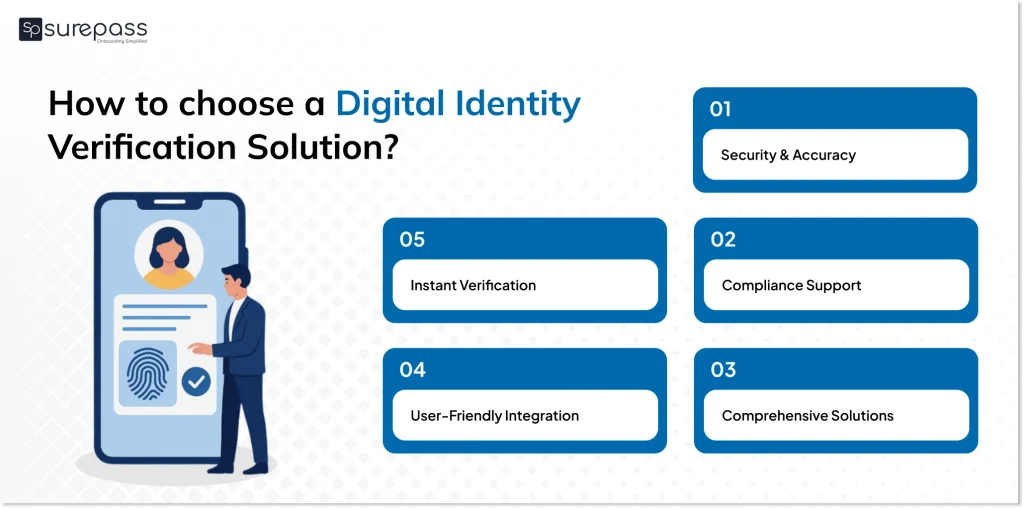
There are a few things you need to consider when choosing an online identity verification service:
- Security and Accuracy: It is recommended to choose an option that provides the highest level of accuracy, AI-powered checks, and detection of fraud.
- Compliance Support: It’s in line with laws such as KYC, AML, RBI guidelines, as well as the laws on data protection.
- Comprehensive set of verification solutions. The service provider must offer a variety of authentication options, like Aadhaar, PAN, DL, etc.
- User-friendly: The software should provide simple API integration with clear guidance.
- Instant Verification: This solution will help verify the identity of people in real time.
Best Digital Identity Verification service provider in India.
Surepas is the most trusted authentic digital ID verification service provider in India with a broad collection of APIs to verify, including Aadhaar, PAN, DL, Voter ID, Video KYC, and many others. Companies can easily incorporate the API in their existing systems and speed up the process of onboarding.
Conclusion
The digital identity verification process is not an option but an essential requirement for companies. It is convenient and speeds up the verification procedures. Digital identity verification solutions solve these issues by providing continuous, automated, and safe verification.
FAQs
Ques: What is Digital Identity Verification?
Ans: It is a process of verifying a person’s identity online through a liveness check, document verification, and facial recognition.
Ques: Is digital identity verification a secure process?
Ans: Yes, It is a secure process.
Ques: What documents are required for digital identity verification in India?
Ans: You need the following documents:
- Aadhaar Card
- PAN Card
- Passport
- Driving License
- Voter ID
Ques: Is digital identity verification mandatory in India?
Ans: Yes, the digital identity verification process is mandatory in India.
Ques: How to choose the right Digital Identity verification solution provider?
Ans: You should look for accuracy, security, uptime, and easy integration before choosing any identity verification provider.
Automate your KYC Process & Reduce Fraud!
We have helped 3000+ companies in reducing Fraud by 95%