


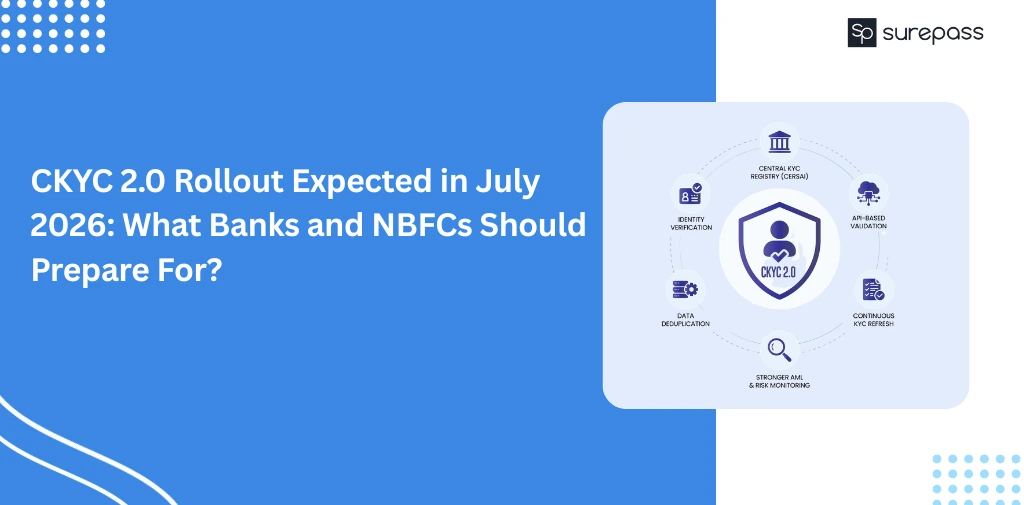
India’s CKYC framework is preparing for a major upgrade. The CKYC 2.0 is going to roll out in July 2026. According to recent industry discussion and regulatory updates, the new CKYC 2.0 framework will change the customer verification through real-time APIs, automated verification, DigiLocker integration, and strong fraud controls.
For banks, NBFCs, and regulated entities, the upgrade will change the usual customer onboarding, compliance, and verification operations
What Is Changing Under CKYC 2.0?
CKYC (Central KYC) was introduced to create a centralized KYC record for customers. This means customers only need to complete KYC once, and the same record can be used across different financial institutions.
CKYC 2.0 is the upgraded version of this system. It is expected to improve the current process with:
- Real-time verification
- API-based workflows
- Better data validation
- DigiLocker integration
- Stronger fraud checks
- Easier customer consent management
Instead of depending on static PDFs and manual uploads, institutions will be able to process KYC information much faster and with better accuracy.
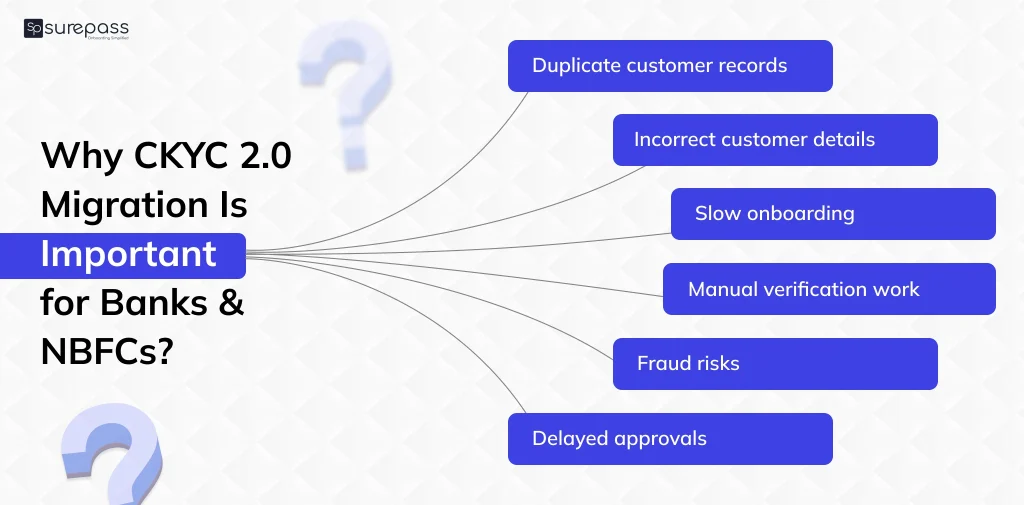
Why CKYC 2.0 Migration Is Important for Banks and NBFCs?
Many financial institutions face common KYC problems, such as:
- Duplicate customer records
- Incorrect customer details
- Slow onboarding
- Manual verification work
- Fraud risks
- Delayed approvals
CKYC 2.0 focuses on reducing these issues by making KYC verification more automated and real-time. For banks, NBFCs, and fintechs, this can help improve both compliance and customer experience.
Automate your KYC Process & Reduce Fraud!
We have helped 3000+ companies in reducing Fraud by 95%
Key Changes Expected Under CKYC 2.0 Rollout
Real-Time KYC Verification
One of the biggest changes is the shift from batch processing to real-time verification.
This means institutions can:
- Verify customer details instantly
- Reduce onboarding delays
- Speed up approvals
- Improve customer experience
API-Based Integration
CKYC 2.0 is expected to support XML and JSON APIs instead of manual document uploads.
This will help:
- Different systems connect easily
- Improve data accuracy
- Reduce manual entry errors
- Make onboarding smoother
Better Fraud Prevention
AI-based duplicate checks and advanced validations, institutions help:
- Detect fake identities faster
- Reduce duplicate KYC records
- Prevent fraud attempts
- Improve risk monitoring
DigiLocker Support
CKYC 2.0 will support DigiLocker-based document verification.
This can help institutions:
- Verify documents digitally
- Reduce paper-based processes
- Improve customer convenience
- Speed up onboarding journeys
Improved Customer Consent
Customers are also expected to get better control over how their KYC data is used.
This may include:
- Consent-based data sharing
- Better audit tracking
- More transparency in data access
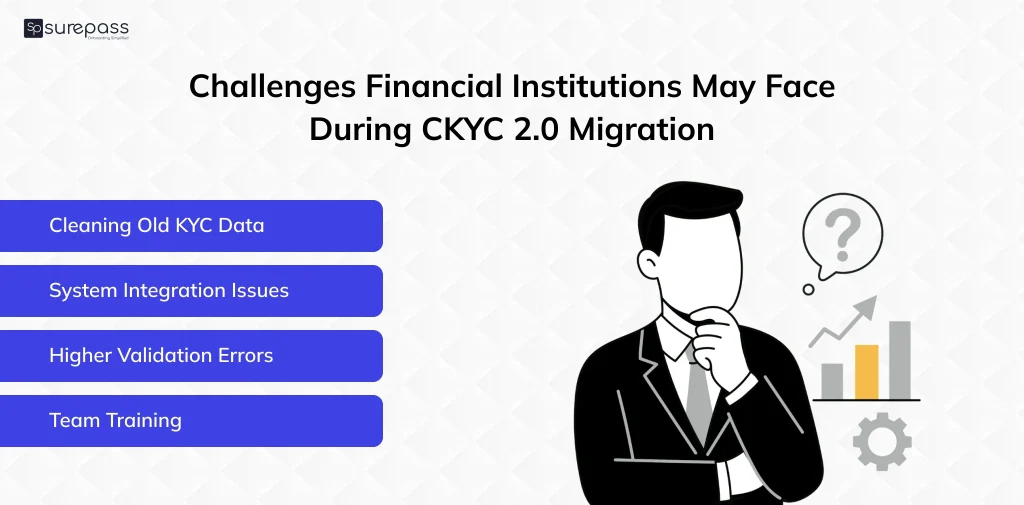
Challenges Financial Institutions May Face During CKYC 2.0 Migration
Even though CKYC 2.0 offers many benefits, migration may not be easy for every organization.
Cleaning Old KYC Data
Many institutions have old or incomplete customer records.
Before migration, teams may need to:
- Remove duplicate records
- Correct missing information
- Update invalid data
- Standardize customer details
System Integration Issues
Organizations that still depend on the older systems may face technical challenges while integrating real-time APIs.
Some common issues may include:
- Legacy system limitations
- API compatibility problems
- Workflow redesign requirements
- Security upgrades
Higher Validation Errors
CKYC 2.0 is expected to introduce stricter validation checks.
This means:
- Incorrect data may get rejected instantly
- Missing fields can delay onboarding
- Teams may need stronger verification processes
Team Training
Operations and compliance teams will also need training to understand the new workflows and systems.
Institutions may need to train teams on:
- Real-time KYC processing
- API-based onboarding
- Updated compliance requirements
- Error handling procedures
What Industry Experts Expect Financial Institutions to Prepare For Before CKYC 2.0 Rollout?
Here is how an organization can prepare for a smooth migration:
Start Cleaning Existing Data: Review old customer records and fix incorrect or incomplete information before migration begins. Clean data will help reduce validation failures later.
Upgrade Technical Systems: Organizations should ensure their systems are ready for:
- Real-time APIs
- Automated verification
- XML and JSON processing
- Secure data exchange
Automate Verification Workflows: Manual onboarding processes can slow down operations. Institutions should automate:
- PAN verification
- Aadhaar verification
- CKYC verification
- Document verification
- Fraud checks
This can improve both speed and accuracy.
Prepare Teams Early: Migration becomes smoother when operations, compliance, and technical teams are prepared in advance. Training teams early can help reduce confusion during implementation.uring implementation.
How Surepass Helps Institutions Prepare for CKYC 2.0
Surepass helps banks, NBFCs, fintechs, and regulated entities simplify digital onboarding and verification workflows. Surepass offers the CKYC 2.0 platform for all the built-in features required for the CKYC migration, including smart deduplication, Automated Masking, intelligent validation engine, and much more. Regulated Entities can rely on this platform for a smoother migration and upgrade.
Conclusion
CKYC 2.0 is expected to bring a major improvement to India’s digital KYC infrastructure. It will help financial institutions move towards faster, safer, and more automated onboarding processes.
For banks, NBFCs, fintechs, and other regulated entities, early preparation will be important. Organizations that start upgrading systems, cleaning data, and automating workflows now may experience a smoother migration in the future.
Automate your KYC Process & Reduce Fraud!
We have helped 3000+ companies in reducing Fraud by 95%