




Traditionally, Aadhaar holders submit a physical copy of their Aadhaar card to gain entry to an event, office, or facility. The verifying entity collects and stores photocopies as part of the verification process. However, this process is prone to misuse and impersonation. Physical document storage and management is a tough task.
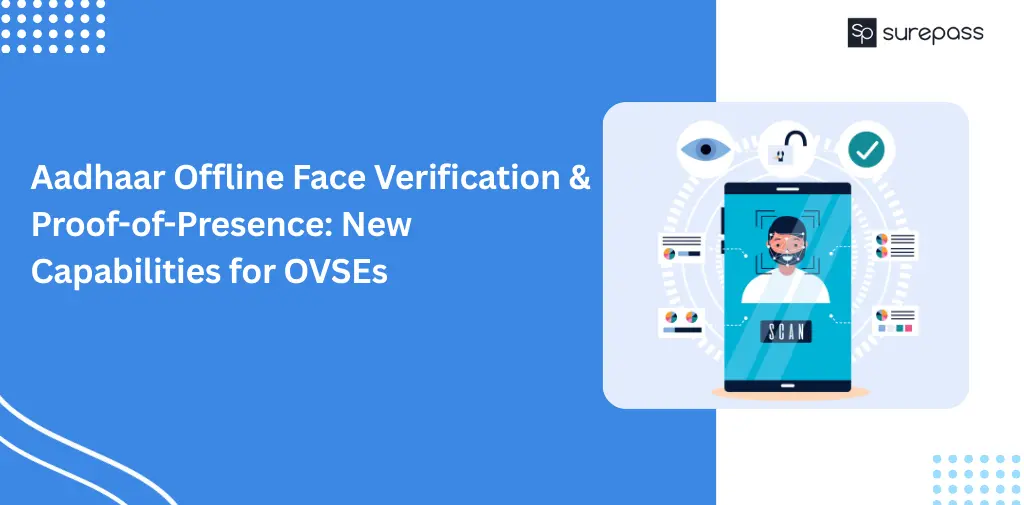
The new Aadhaar App solves these issues with an offline face authentication feature. Now, OVSE-registered entities can conduct face verification. In this blog, you will learn about offline face verification.
What is Offline Face Verification and Proof of Presence?
It is a method of verifying an individual’s identity and proof of presence. It captures and verifies a face without accessing the central UIDAI database (UIDAI). Real-time face verification helps confirm proof of presence and ensure that only the legitimate individual gets entry or access.
Automate your KYC Process & Reduce Fraud!
We have helped 3000+ companies in reducing Fraud by 95%
How does offline face verification work?
Here is how face verification is conducted:
- Aadhaar number holder (ANH) scans the QR code using the Aadhaar App on their mobile at the entry points.
- After that, he receives the face authentication request
- After successful face authentication verification, he can enter the office.
Benefits of Offline Face Verification
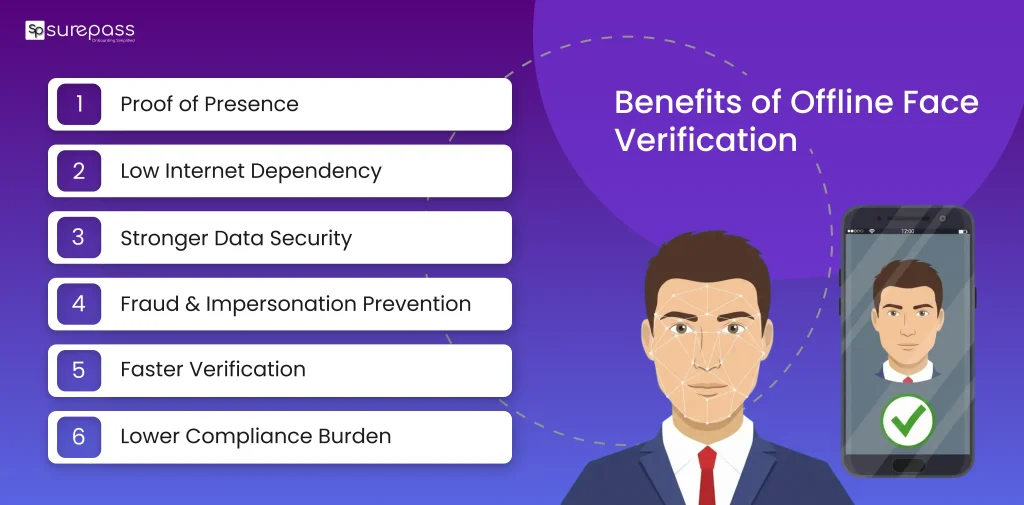
Offline face authentication offers various benefits to the OVSE:
- Proof of Presence: The new Aadhaar App face verification process confirms that the person is physically present while verifying the Aadhaar details.
- Fraud Prevention and Impersonation: The real-time face verification and selective data sharing with consent prevent identity theft.
- Faster Verification: The offline Aadhaar verification reduces the paperwork and enhances the onboarding process. Now the OVSE does not need to collect or store a physical copy of Aadhaar.
- Lower Compliance Burden: The real-time authentication requires a proper security infrastructure and has to follow compliance guidelines. Offline verification reduces the compliance burden that occurs in CIDR-based verification.
- Cost-effective: For online verification, businesses have to invest in security or facial match solutions. But they don’t need to develop such infrastructure or solutions for face verification.
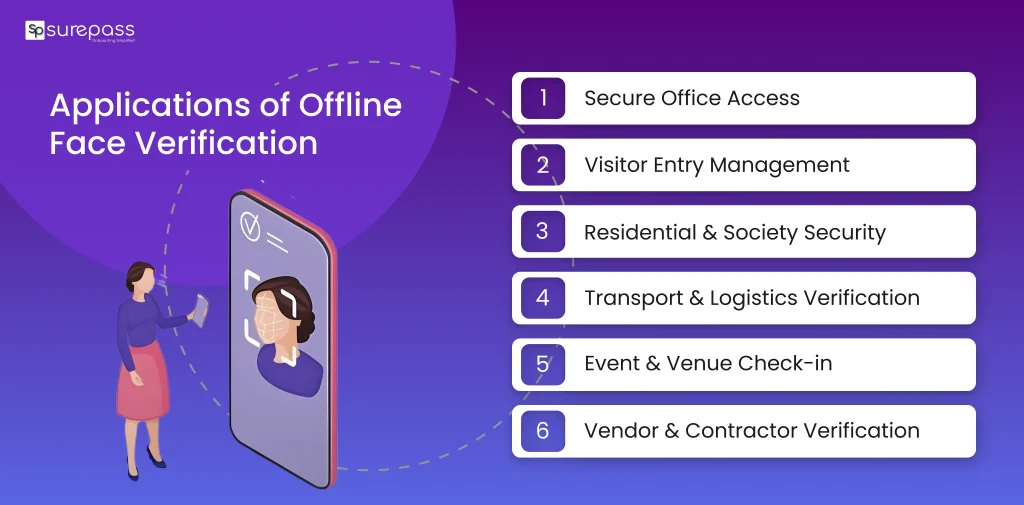
Applications of Offline Face Verification
Offline Aadhaar face verification can be used for various purposes, such as:
Secure Access Control at Office Premises
The face verification helps businesses allow entry to authorized individuals only. It reduces the need for manual checks as well as prevents identity theft and impersonation. Here is how Offline Verification helps in getting entry at the office premises:
How does an employee get entry to the office
- Visitor Scans QR
- Approves data sharing
- Completes face verification
- Entry approved
Residential Access and Community Management
Offline face verification helps residential societies and communities manage entry securely. It allows only the legitimate visitor, guest, domestic workers or maid get entry to enter the society after verification.
Transport and Logistics
Transport and logistics companies can easily verify drivers, warehouse staff, and delivery partners with an Offline Verification facility. It ensures that the person is genuine and physically present at the premises.
Event and Venue Management
Event organizers can use the face verification feature to verify participants at exhibitions, conferences, and public events.
Physical Aadhaar vs Online vs Offline Face Verification
| Criteria | Physical Aadhaar | Online Verification | Offline Face Verification |
| Accesses UIDAI database (CIDR) | No | Yes | No |
| Fraud / impersonation risk | High | Low | Low |
| Data stored by the entity (OVSE) | Full photocopy retained | No | No |
| Compliance & security burden | Low, but risky | High (needs secure infra) | Low |
| Infrastructure / cost to set up | Low | High | Low |
| Onboarding speed | Slow (manual checks) | Moderate | Fast — QR scan to entry in seconds |
Conclusion
Identity theft, unauthorized individual entry, proxy entries, and Aadhaar misuse are some major issues we face in day-to-day life. The new Aadhaar App solves these issues with face authentication. Now, registered OVSE can conduct secure Offline Verification and confirm proof of presence with the new Aadhaar App. This confirms that the employee or visitor is genuine and physically present at the premises. It reduces fraud risk, data sharing, and dependency on manual checks.
FAQs
Ques: What is offline face verification?
Ans: It is a process of verifying individual identity with face authentication through the new Aadhaar App.
Ques: Does Offline Face Verification replace Aadhaar photocopies?
Ans: Yes, OVSE using the new Aadhaar App no longer needs to collect or store Aadhaar copies for proof of presence verification.
Ques: Can it be used for employee attendance?
Ans: Yes, face verification can be used for checking employee physical presence in the office.
Ques: Is Aadhaar offline verification suitable for visitor management?
Ans: Yes, Businesses, offices, and event organizers can use Offline Face Verification to securely verify visitors and confirm their physical presence before giving entry.
Ques: Does it confirm proof of presence?
Ans: Yes, the real-time authentication confirms that the person is physically present at the premises.
Ques: Who can conduct offline face verification?
Ans: Only UIDAI-registered OVSEs can conduct offline face verification.
Automate your KYC Process & Reduce Fraud!
We have helped 3000+ companies in reducing Fraud by 95%