




Traditionally, Aadhaar holders submit a physical copy of their Aadhaar card to the Offline Verification entity to gain entry to an event, office, or facility. The verifying entity collects and stores photocopies as part of the verification process. However, this process is prone to misuse and impersonation. Many offices struggle with problems such as fake entries, proxy attendance, and weak access control. They need a secure offline Aadhaar verification method with proof of presence verification.
The Aadhaar App, with features such as face authentication, selective data sharing, profile updates, and QR code scanning, helps solve these issues. It allows registered OVSEs to conduct secure face and identity verification without connecting directly to the CIDR UIDAI database. This confirms that only the legitimate individual gets entry to events or offices.
What is Offline Face Verification and Proof of Presence?
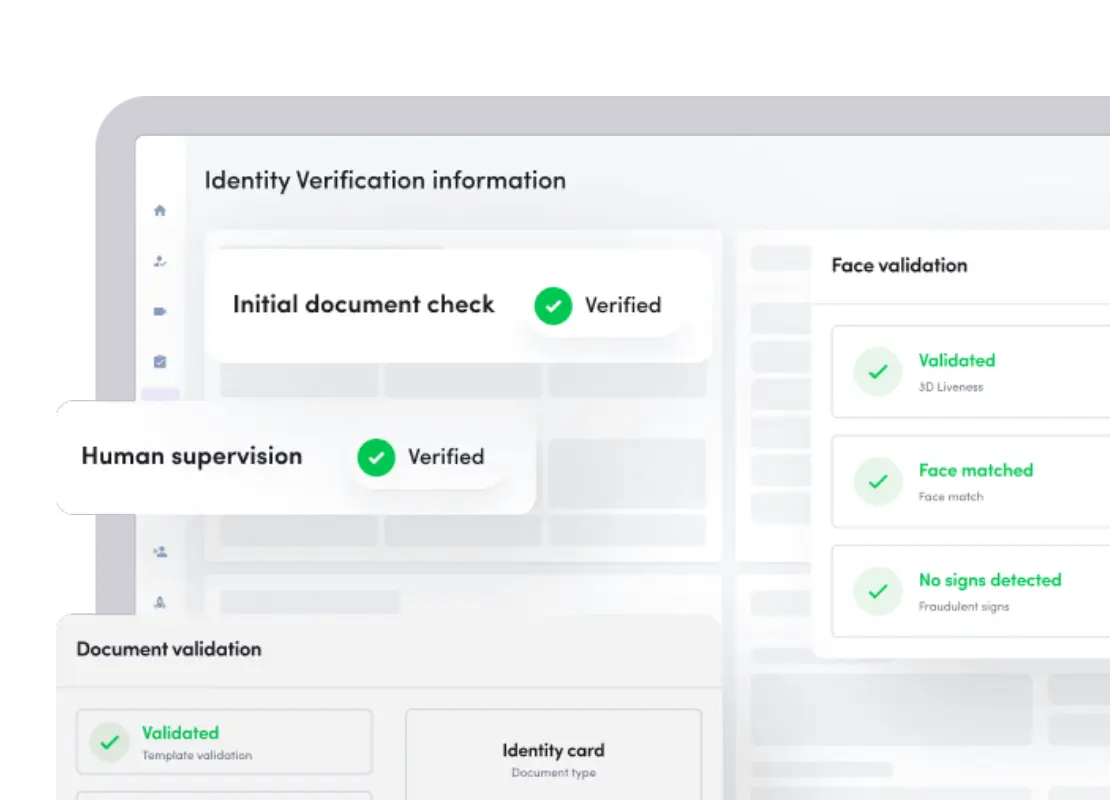
Offline face verification is a method of verifying an individual’s identity and proof of presence using the Aadhaar App. It captures and verifies a face and digitally signed Aadhaar details without accessing the central UIDAI database (UIDAI). Real-time face verification helps confirm proof of presence and ensure that only the legitimate individual gets entry or access.
Automate your KYC Process & Reduce Fraud!
We have helped 3000+ companies in reducing Fraud by 95%
How does offline face verification work?
Here is how an OVSE can use face verification:
- Aadhaar number holder (ANH) scans the QR code using the Aadhaar App on their mobile at the entry points.
- After that, ANH will get a request to share data and face verification to confirm proof of presence
- Aadhaar App captures and verifies the ANH image, and gives verified credentials
- Credentials will be shared with OVSE for verification
- OVSE will verify the digitally signed credentials
- After successful verification, ANH can enter the office.
Benefits of Offline Face Verification
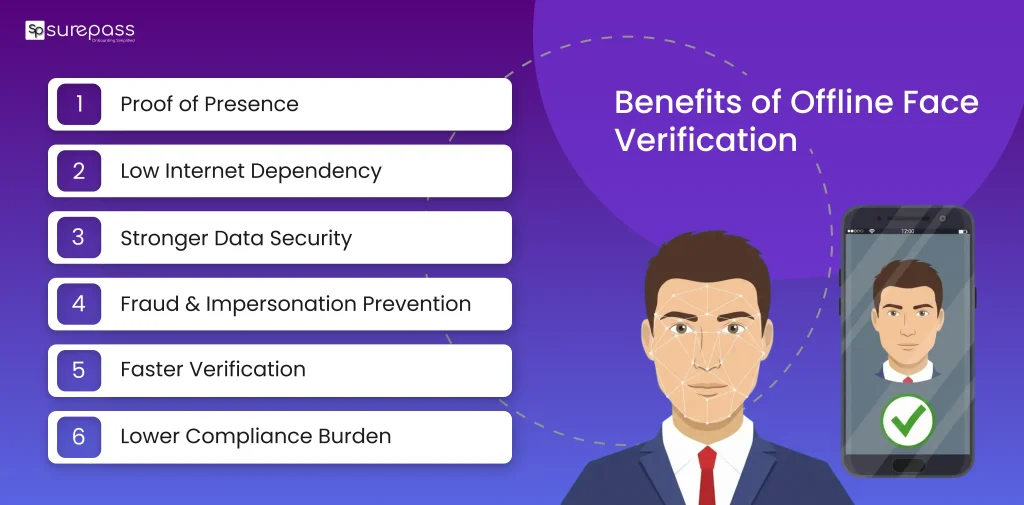
There are multiple benefits of using Aadhaar verification for OVSEs and Aadhaar number holders:
- Proof of Presence: The new Aadhaar App face verification process confirms that the person is physically present while verifying the Aadhaar details.
- Reduced Internet Dependency: Both OVSE and Aadhaar Number Holders can share digitally signed documents without connecting to the CIDR database.
- Enhanced Data Security: The selective data sharing gives Aadhaar holders control over what information is shared with the entity. It improves data security.
- Fraud Prevention and Impersonation: The real-time face verification and selective data sharing with consent prevent identity theft.
- Faster Verification: The offline Aadhaar verification reduces the paperwork and enhances the onboarding process. Now the entity does not need to collect or store a physical copy of Aadhaar.
- Lower Compliance Burden: The real-time authentication requires a proper security infrastructure. Offline Verification reduces compliance burden.
Applications of Offline Face Verification
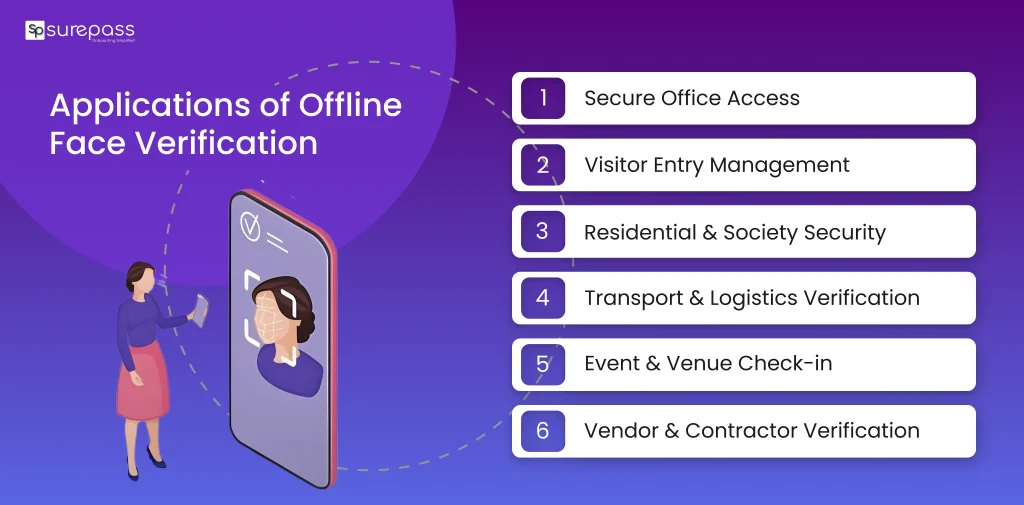
Offline Aadhaar face verification can be used for various purposes, such as:
Secure Access Control at Official Premises
The offline face verification helps businesses allow entry to authorized individuals only. It reduces the need for manual checks as well as prevents identity theft and impersonation. Here is how Offline Verification helps in getting entry at the office premises:
How does an employee get entry to the office
- Visitor Scans QR
- Approves data sharing
- Completes face verification
- Credential shared
- Entry approved
Residential Access and Community Management
Offline face verification helps residential societies and communities manage entry securely. It allows only the legitimate visitor, guest, domestic workers, maid get entry to enter the society after verification.
Transport and Logistics
Transport and logistics companies can easily verify drivers, warehouse staff, and delivery partners with an Offline Verification facility. It ensures that the person is genuine and physically present at the premises.
Event and Venue Management
Event organizers can use the face verification feature to verify participants at exhibitions, conferences, and public events.
How to Become an OVSE?
An entity can apply for OVSE registration through the UIDAI portal to become an OVSE. You need to download the OVSE registration form. Fill the form with the required details and submit it to UIDAI. UIDAI will review the application and give approval and further assistance for integration.
Conclusion
Identity theft, unauthorized individual entry, proxy entries, and Aadhaar misuse are some major issues we face in day-to-day life. Online Aadhaar verification is not possible in remote locations, and does not give data sharing control. The new Aadhaar App solves these issues with face verification and a QR scanning feature. Now, registered OVSE can conduct secure Offline Verification and confirm the proof of presence with the new Aadhaar App. This confirms that the employee or visitor is genuine and physically present at the premises. This reduces the fraud risk, data sharing, and dependency on manual checks. Businesses seeking Offline Verification can easily apply for registration from the UIDAI OVSE registration portal.
FAQs
Ques: Can KYC be done offline?
Ans: Yes, KYC can be done offline through QR scanning and XML-based verification, and face verification via the Aadhaar App.
Ques: What is offline face verification?
Ans: It is a process of verifying individual identity via Aadhaar using QR scanning and face verification.
Ques: Is consent required for Offline Verification?
Ans: Yes, OVSE needs to obtain explicit consent before verification.
Ques: Can Offline Verification ensure proof of presence?
Ans: Yes, with the new Aadhaar App, OVSEs can capture and verify face, which ensures proof of presence.
Ques: What are the benefits of Offline Verification?
Ans: Offline Aadhaar verification offers several benefits, including quick verification without connecting to the UIDAI database, selective data sharing, proof of presence check, and more.
Automate your KYC Process & Reduce Fraud!
We have helped 3000+ companies in reducing Fraud by 95%