




Cybercriminals are using new techniques to bypass security checks and gain unauthorized access. According to reports, over 80% of account takeover attempts are SIM-based attacks such as SIM swapping. Traditional authentication methods are unable to detect SIM swapping. Here, SIM linking solves this issue by verifying SIM-level identifiers like IMSI. Even if the user loses their passwords, attackers can’t login with the other device. Even the regulatory bodies make it mandatory for the apps to check SIM binding.
What is SIM Binding?
SIM Binding is a security protocol that links a user’s app account to a specific SIM. The main reason behind securing a SIM to the account prevents the SIM’s unique identifiers (IMSI, ICCID) to being unauthorized users and account hijacking. In some cases, if the login credentials are compromised or leaked, the account will be locked. This proactive measure is used to add an extra layer of protection compared to other verification options.
Automate your KYC Process & Reduce Fraud!
We have helped 3000+ companies in reducing Fraud by 95%
Why SIM-Based Attacks are Increasing?
Mobile numbers are the main digital identity for banking, OTT apps, and UPI. The OTP and SMS based authentication are used for verification that can be easily tricked with SIM Swap. Social engineering attacks on telecom store staff to issue duplicate SIM Cards. Lack of continuous SIM verification in many apps after initial registration, Attackers can reset the password and gain unauthorized access. The multi-device web logging increases more chances of digital fraud.
SIM Binding Mandate
The Department of Telecommunications (DoT) has mandated SIM binding for OTT communication apps to prevent misuse and impersonation.
If the SIM is changed or removed, access to the bound app or service may be restricted until re-verification. It is made to reduce SIM-swap fraud, identity misuse, and unauthorized access.
SIM Binding vs Device Binding
The main difference between the SIM and Device Binding:
SIM Binding
- It links the user’s account or service to a specific SIM Card.
- Identifies users based on SIM-related data (mobile number, IMSI, Carrier information).
- It changes if the SIM is replaced or ported.
- Useful for telecom-based authentication and OTP verification.
- It helps detect SIM swap fraud.
Device Binding
- Mobile device binding links a user’s account or service to the specific physical device.
- Uses device-level identifiers (hardware, OS, app instance, device fingerprinting).
- Works across SIM-less devices (Wi-Fi only, tablets).
How SIM Binding Works?
- Step 1: User Registration or Onboarding
- Step 2: SIM and Device Linking
- Step 3: Authentication During App Access
- Step 4: SIM Swap Detection
- Step 5: Continuous or Periodic Verification
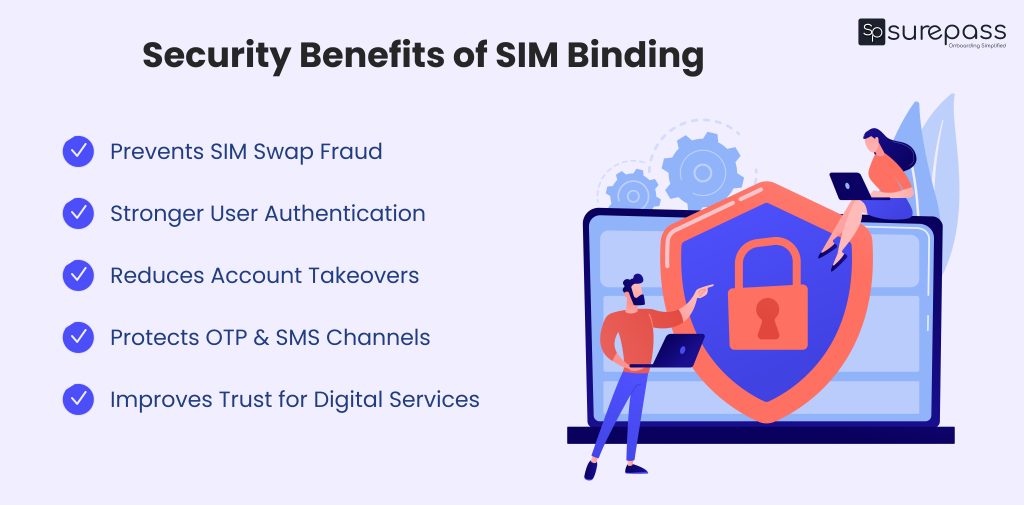
Security Benefits of SIM Binding
Linking with a SIM card offers many benefits:
- Reduce SIM Swap Fraud
Binding devices prevent account hijacking and SIM swapping with app checks for the real SIM presence.
- Prevent Unauthorized Access
It ensures that the user can access the services only with the registered device linked to a specific SIM. It blocks access from other phones.
- Stops Account Hijacking
Even if the user credentials got compromised, a fraudster can’t hijack the account with SIM Swapping.
What is SIM Binding in WhatsApp?
SIM Binding in WhatsApp is the new mandate requiring the app to stay continuously linked to the original SIM card used for registration. If the SIM is removed or swapped, the web version logs out every six hours.
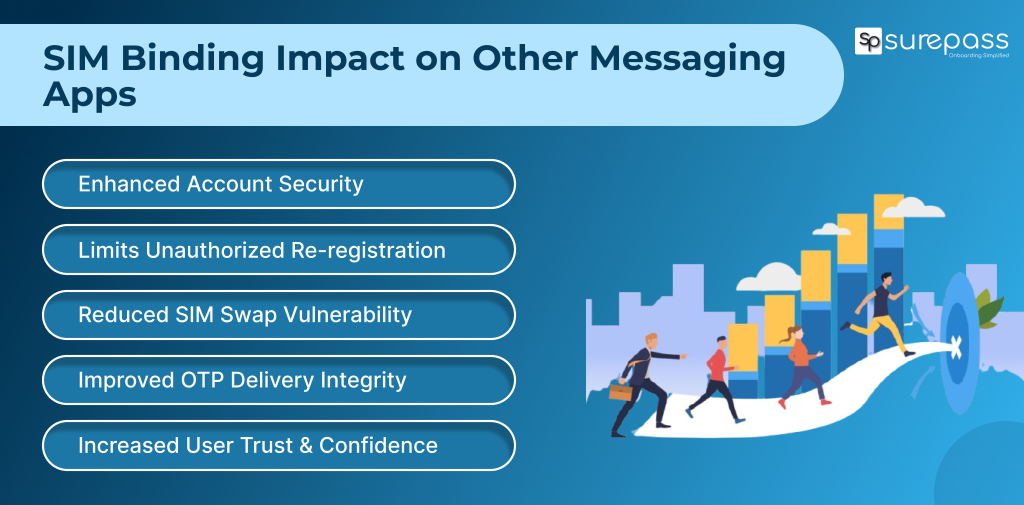
SIM Binding Impact on Other Messaging Apps
Apart from WhatsApp, almost all OTT messaging apps that use a mobile number as the identity should follow SIM Binding. This list of platforms includes Telegram, Snapchat, Signal, ShareChat, JioChat, Josh, and more.
The binding of SIM with Apps will change the way the web and multi-device access work. App users need to undergo re-authentication more frequently. Web session will automatically log out if the SIM is not detected. It will reduce unauthorized access.
Conclusion
SIM binding links the user app account to the SIM. It improves the security and ensures that only the legitimate user can access the app. DoT has made SIM mandatory for all OTP communication applications. These apps must check if the original SIM Card is active in the device. After every 6 hours, the app will automatically log out the user. As account takeover fraud is rising, It helps in enhancing the security and privacy of the user. It will prevent impersonation and misuse.
FAQs
Ques: What is SIM Binding?
Ans: SIM is the linking of the user’s app with a specific SIM.
Ques: Is SIM Binding Mandatory?
Ans: Yes, It’s Mandatory.
Ques: Which Apps are required to implement SIM Binding?
Ans: All the apps that rely on a mobile number for identity and OTP communication, including:
- Messaging Apps (WhatsApp, Telegram, Signal)
- Banking and UPI Apps
- Social and communication OTT Apps
- Financial and Fintech Platforms
Ques: Is SIM Binding Applicable only to messaging apps?
Ans: No, it applies to all apps through mobile number for verification, including banking and fintech apps.
Ques: Can SIM Binding work with dual SIM Phones?
Ans: Yes, but the app verifies only the SIM used during registration.
Automate your KYC Process & Reduce Fraud!
We have helped 3000+ companies in reducing Fraud by 95%