


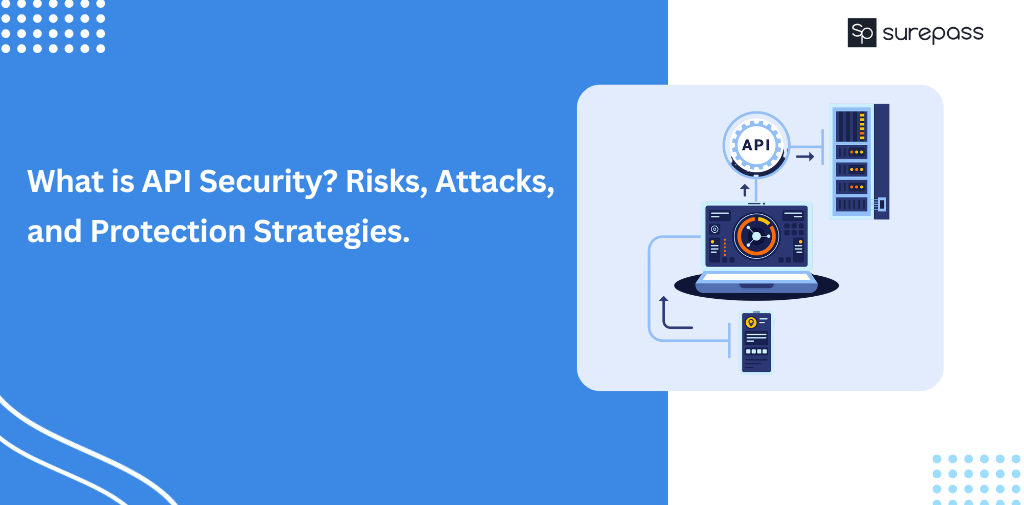
The majority of businesses use APIs for data exchange. APIs help make the work process faster and simpler. Research indicates that 76% of enterprises had suffered from the effects of an API security vulnerability or attack in the past year. Every business needs API security to authenticate users, confirm requests, avoid misuse of APIs, and to keep track of the traffic flow to identify suspicious behaviour. It will protect the business from loss and penalty.
What is API security?
API security is the process of making API secure and protecting them from misuse, data breaches, and unauthorized access. As API are used as gateways between two systems, they are high-value targets for attackers. It ensures that only legitimate users and applications can interact with these interfaces and that data stays safe in transit and at rest.
Automate your KYC Process & Reduce Fraud!
We have helped 3000+ companies in reducing Fraud by 95%
What is an API Cyber Security?
API refers to the set of rules that allows two software systems to communicate. In cybersecurity, API are the main target for the attackers as they deal with details, payments, or account actions. As APIs connect systems directly, hackers may try to attack them instead of using the website or app.
If the API is not protected properly, attackers can:
- Steal Private Data
- Access account without permission
- Control of damage to the backend system
Why Does API Security Matter?
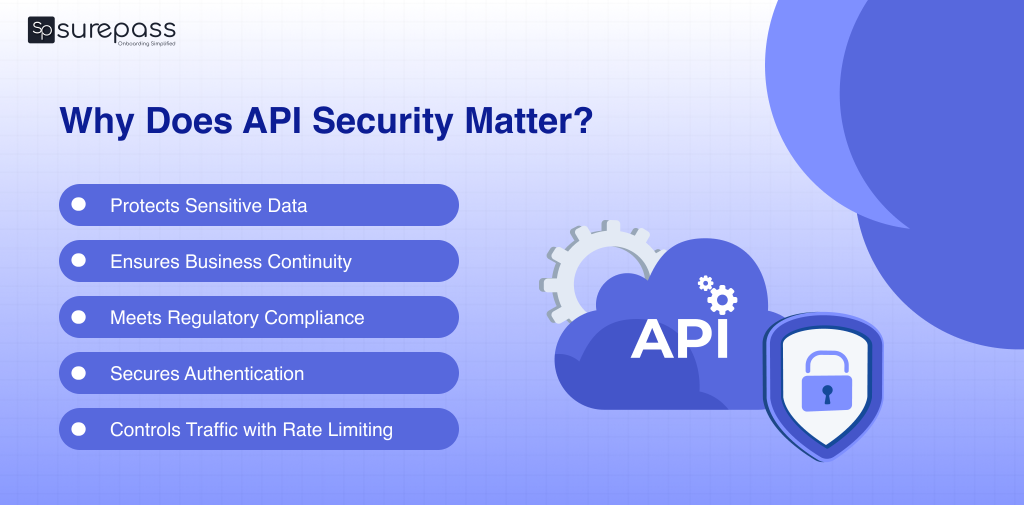
These are reasons why API security is essential for business:
- Sensitive Data Protection: APIs are used to manage confidential information, such as personally identifiable information and financial details. Lack of security can lead to data breaches, such as the 2021 T-Mobile incident, where hackers accessed the data of over 40 million users by exploiting an API vulnerability.
- Business Continuity and Operations: API security breaches can disturb business operations and cause system downtime. It results in loss of revenue and productivity. Strong security measures confirm services remain available and functional.
- Compliance and Regulatory Requirements: With DPDP, HIPAA, PCI DSS, and GDPR like strict regulations, businesses need to prevent data breaches data penalties.
- Prevents Specific Attacks: such as Bola Object Level Authorization, Broken Authentication, and DoS attacks.
How to Secure APIs?
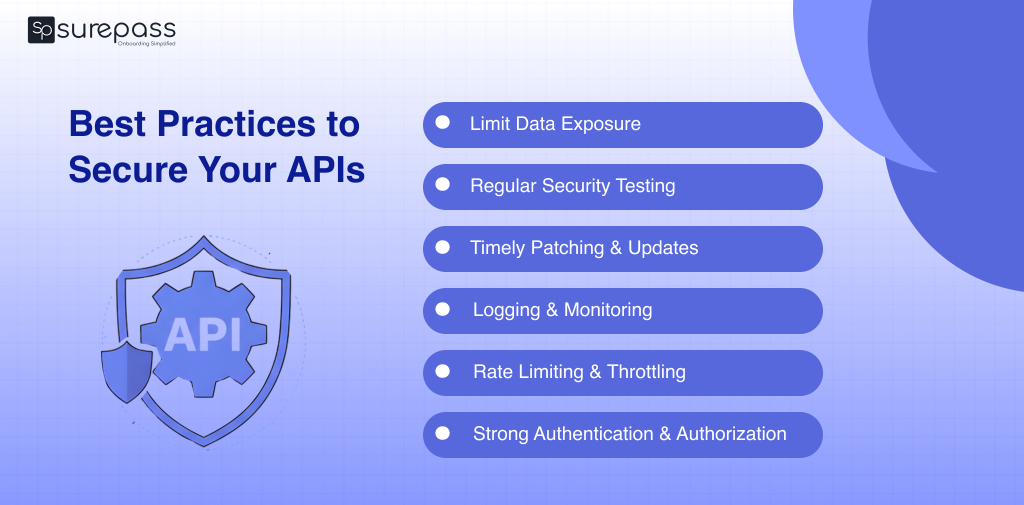
Business can secure APIs with:
- Strong Authentication and Authorization
API security is used to verify who will make a request and what they are allowed to do.
Use standards like OAuth 2.0, OpenID Connect, JWT, and mutual TLS (mTLS)
Try to avoid simple protection methods. It can be stolen or leaked.
Implement role-based or attribute-based access controls (RBAC/ABAC)
Limit token lifetimes and support revocation.
- Minimize Exposure Data
The best way to protect yourself from unnecessary trouble, try to avoid exposing sensitive data fields you don’t want to share.
- Conduct regular security testing and audits
Conduct regular API tests to check vulnerabilities. You can check the testing through penetration testing and vulnerability scanners.
- Keep APIs up to date with patches
Regular updation of software, libraries, and API infrastructure to fix known vulnerabilities.
- Log and Monitor API Activity:
Record errors, requests, and unusual behaviour. It will help in detecting threats and conducting audits.
- Use API gateways and firewalls:
API gateways act like a security guard for your APIs. It helps manage authentication and prevent unwanted traffic.
- Apply rate limiting and throttling:
Control the number of requests a user or IP can make to limit brute force attacks and DDoS.
- Verify and Sanitize Input Data:
Never trust external input; check it against expected formats and remove anything harmful to prevent injection attacks.
API Security Testing – What it is and Why it Matters
In simple words, API security testing is a process of checking API vulnerabilities by simulating interactions. This test ensures that the API can handle data, authentication, and errors securely. It checks:
- Invalid or unexpected data is sent
- Unauthorized users try to access endpoints
- Authentication or authorization rules are bypassed
- Requests exceed normal usage limits
Why does API Security Testing Matter?
APIs often connect directly to databases and backend systems. If even a single endpoint is insecure, then an attacker can:
- Steal sensitive user or business data
- Gain unauthorized access to systems
- Abuse business logic (e.g., changing prices or account details)
- Cause service downtime
Key Benefits of API Security Testing
There are many benefits of testing:
- Find security flaws early in development
- Reduces the risk of data breaches
- Help meet compliance and security checks
Conclusion
Maintaining API security is crucial for every business. APIs are a source of sensitive data as well as the business logic that makes APIs the prime target for cybercriminals. Poor authentication, inadequate authorization, and the absence of surveillance can result in security breaches, disruptions to services, and even compliance violations. Companies should use solid authentication, adequate access control, rate-limiting input validation, as well as regular monitoring. Regular API security tests help to find security holes.
FAQs
Ques: What is API Security?
Ans: It is the method of protecting APIs from unauthorized access and attacks.
Ques: What is the Broken Object Level Authorization (BOLA)?
Ans: BOLA occurs when APIs fail to verify object access permission. It allows attackers to manipulate identifiers to access unauthorized data.
Ques: Why is API security testing important?
Ans: Testing is important for finding vulnerabilities before issues and preventing attackers.
Ques: What is the difference between authorization and authentication?
Ans: Authentication helps confirm the identity of a person. Authorization defines what data the client can access.
Ques: What role does rate limiting play in API Security?
Ans: Rate limiting helps protect APIs from abuse and DoS attacks.
Automate your KYC Process & Reduce Fraud!
We have helped 3000+ companies in reducing Fraud by 95%