


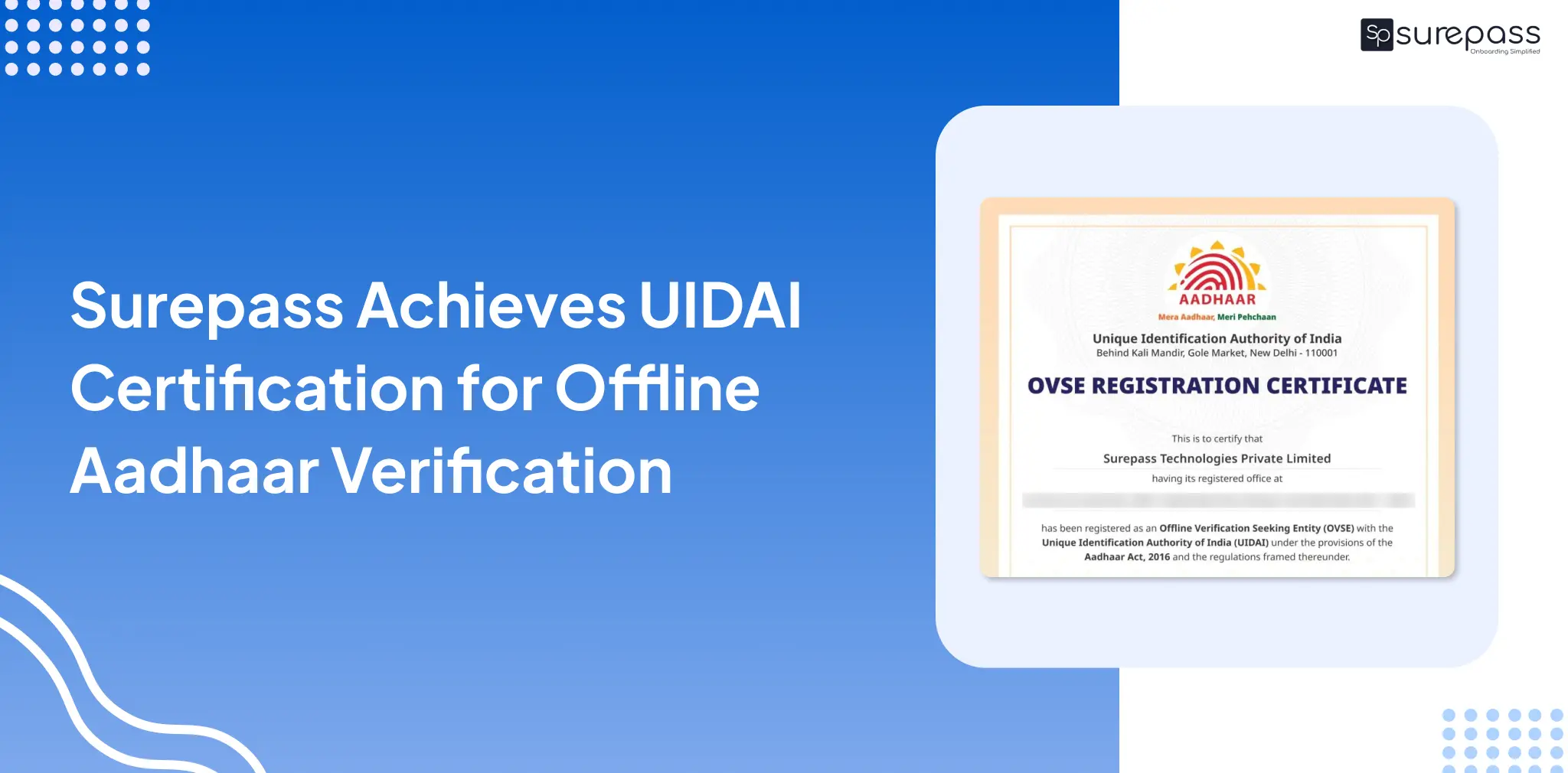
India’s digital ecosystem continues to evolve each day, along with new privacy-first OVSE guidelines for verification that have been laid out by the UIDAI. And, we are glad to announce that Surepass is now a certified Offline Verification Seeking Entity under UIDAI, helping businesses to perform secure Aadhaar verification across India. This is a major step in Surepass’s goal to make trustworthy verification systems.
What is OVSE Certification?
OVSE (Offline Verification Seeking Entity) certification is issued by UIDAI so that organisations can do Aadhaar-based verification using QR codes, and XML files without connecting to the CIDR database.
By becoming a certified OVSE, Surepass can now help businesses to verify users easily using offline methods.
Automate your KYC Process & Reduce Fraud!
We have helped 3000+ companies in reducing Fraud by 95%
Importance of OVSE Certification
OVSE certification ensures that Aadhaar verification is conducted as per UIDAI guidelines. It enables organizations to verify user identity securely without accessing central Aadhaar databases, reducing compliance complexity while protecting user data.
For businesses, OVSE authorization brings greater regulatory confidence, faster onboarding experiences, and a trusted framework for implementing Aadhaar-based verification at scale.
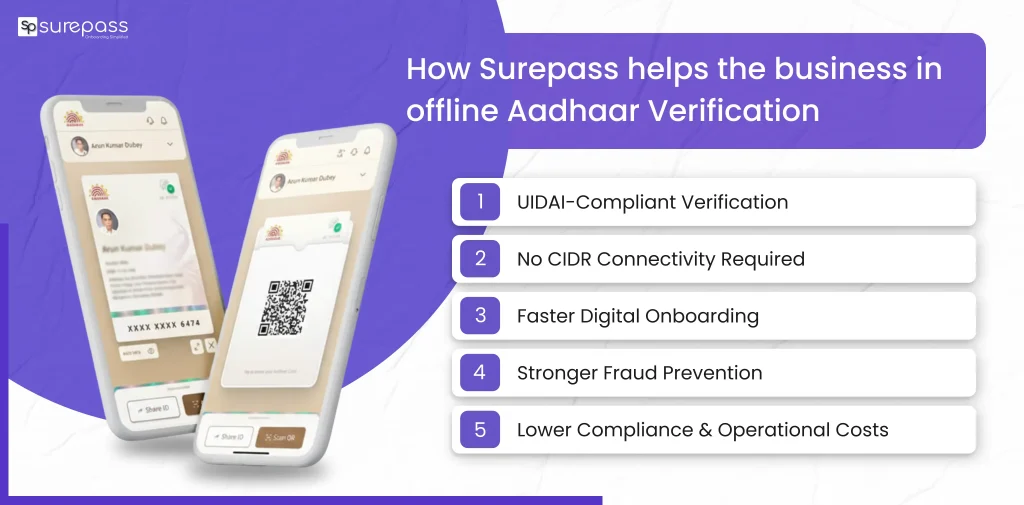
How Surepass helps the business in offline Aadhaar Verification
Surepass’s OVSE certification reaffirms our dedication to providing businesses with secure and seamless identity verification solutions for multiple use cases.
Help the business with:
- Lower Compliance Burden: Verify user identity using approved offline Aadhaar verification methods that comply with UIDAI’s guidelines.
- Faster and Automated Onboarding: Reduce manual verification steps and enable smooth digital onboarding that is fully and increase customer satisfaction.
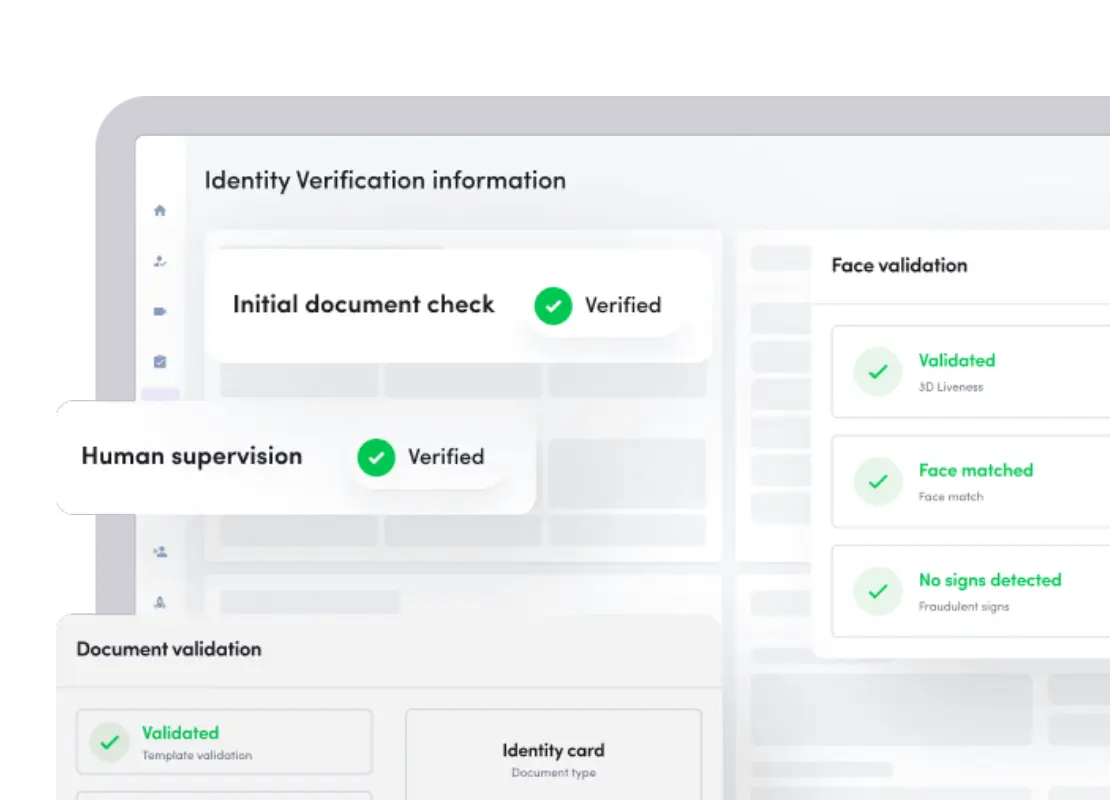
- Reduced Fraud Risk: Prevent fake identities, duplicate accounts, and impersonation attempts with a safe and secure Aadhaar verification from Surepass and keep your business safe from fraud.
Difference Between Offline Verification and Traditional Methods
Traditional Aadhaar verification methods rely on real-time authentication with UIDAI systems. The OVSE framework introduces an approach which secure offline identity verification.
| Feature | Traditional Aadhaar Verification | Offline OVSE Verification |
| Connectivity Requirement | No network connectivity required | Uses offline Aadhaar data |
| Data Handling | May involve sharing Aadhaar numbers during authentication | No Aadhaar number storage or transmission required |
| User Privacy | No privacy, all of your data can be seen. | Privacy-based, only selective data is shared. |
| Verification Methods | In-person biometric verification | QR code, Offline XML, and face-scan |
Conclusion
As India’s digital ecosystem evolves, secure and privacy-focused identity verification is becoming essential for building trust online. Surepass’s as a certified OVSE under UIDAI lets organizations verify Aadhaar through secure offline methods to improve efficiency and protect user privacy, reinforcing our commitment to delivering trusted and scalable identity verification solutions.
FAQs
Ques: What does it mean by OVSE certified Entity?
Ans: It means that Surepass is officially authorized by UIDAI to perform Aadhaar-based offline verification using the methods under the OVSE framework without accessing the central Aadhaar database (CIDR).
Ques: What verification methods are supported by Surepass using the OVSE framework?
Ans: It supports QR code-based verification methods under the OVSE framework.
Ques: Does Aadhaar offline verification connect to the Aadhaar CIDR database during verification?
Ans; No, it does not need to use Aadhaar data and does not access the Central Identities Data Repository (CIDR).
Ques: Can Aadhaar offline verification help reduce onboarding costs?
Ans: Yes, by automating Aadhaar verification and reducing manual checks, businesses can lower operational costs and improve efficiency.
Ques: Is Aadhaar-based offline verification secure?
Ans: Yes, the verification method follows strict UIDAI guidelines. It reduces fraud risks, prevents data misuse, and ensures that only limited and consent-based information is shared.
Automate your KYC Process & Reduce Fraud!
We have helped 3000+ companies in reducing Fraud by 95%