




The Indian Parliamentary Panel has recommended a mandatory Know Your Customer (KYC) Verification for social media, dating, and online gaming platforms users. It aims to reduce fake profiles, cyberfraud, and improve safety standards for the users.
What is the Parliamentary Panel Recommendation for KYC?
The Parliament committee has proposed that digital platforms should implement mandatory user verification mechanisms. According to this proposal, Social Media platforms, Dating and Gaming Apps should verify user identity through government issued documents.
In simple words, implementing KYC to verify profiles on digital platforms such as Instagram, X, YouTube, etc.
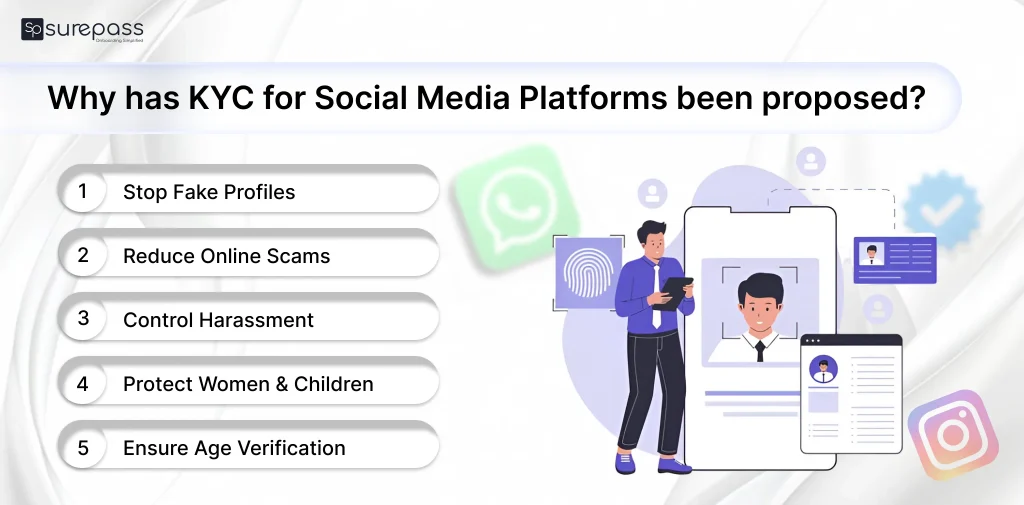
Why has KYC for Social Media Platforms been proposed?
Parliament has recommended KYC due to various reasons:
- Stop Fake Profiles: Many people create fake IDs to hide their real identity. These accounts are often used for illegal activities.
- Prevent Online Scams: Fraudsters use fake accounts to steal money or share personal information and photos without consent.
- Harassment and Abuse: Anonymous accounts are commonly associated with trolling, cyberbullying, and other forms of online abuse.
- Risk to Women and Children: Dating apps and social platforms are misused to target vulnerable users, including minors and women.
- Focus on Age Verification: In addition, the panel has also focused on age verification. Because age verification is important for:
- Dating platforms to prevent underage access.
- Gaming applications to regulate minor participation.
- Protect young users from harmful content.
Automate your KYC Process & Reduce Fraud!
We have helped 3000+ companies in reducing Fraud by 95%
Benefits of KYC on Digital Platforms
Implementing KYC on digital platforms creates a huge change in how we interact online. Following are the benefits:
- User Accountability: Fraudsters, and trolls would no longer have anonymity to hide behind making them engage less in cyberbullying and harassment, and if a cybercrime takes place law enforcement will have more information to get to the criminal.
- Safety for minors: With KYC platforms will be able to verify the ages of their users and make sure children are kept away from adult-only sites like dating apps and gambling and only present them with age-appropriate content.
- Protection From Scams: Mandatory KYC verification will make sure only verified users are able to access the platform, protecting vulnerable users from scams.
Challenges and Concerns of KYC on Digital Platforms
Every change in policy comes with some pushback. Naturally, same is true for this as KYC on digital platforms raises the following concerns:
- Some critics argue that no anonymity will discourage whistleblowers from reporting incidents.
- Government mandated verification will force digital platforms to use verification APIs which will increase their operations cost and may result in a price hike of their services.
- Tech startups can face an increase in drop-off rates as a mandatory KYC process may discourage new users from trying their application.
Regulations Supporting KYC on Digital Platform
Parliament’s recommendation marks a shift towards a safer digital ecosystem in India, with the following laws that align with KYC on mobile platforms:
- Information Technology Act, 2000: Under the intermediary guidelines digital platforms were recommended to move from anonymity for better traceability of information. KYC will help improve user accountability by tracing cybercriminals.
- Digital Personal Data Protection Act: It requires a platform to make sure that the data they process is verified, and in case of minors to make sure the consent is given by a parent or a guardian.
Conclusion:
The Parliament’s recommendation to introduce KYC on digital platforms shows their growing concern of people’s safety against cybercrime. While it may bring technical challenges and privacy concerns at first, the objective is clear. To make India’s digital ecosystem a safe space for users and stop cybercrimes.
Automate your KYC Process & Reduce Fraud!
We have helped 3000+ companies in reducing Fraud by 95%