




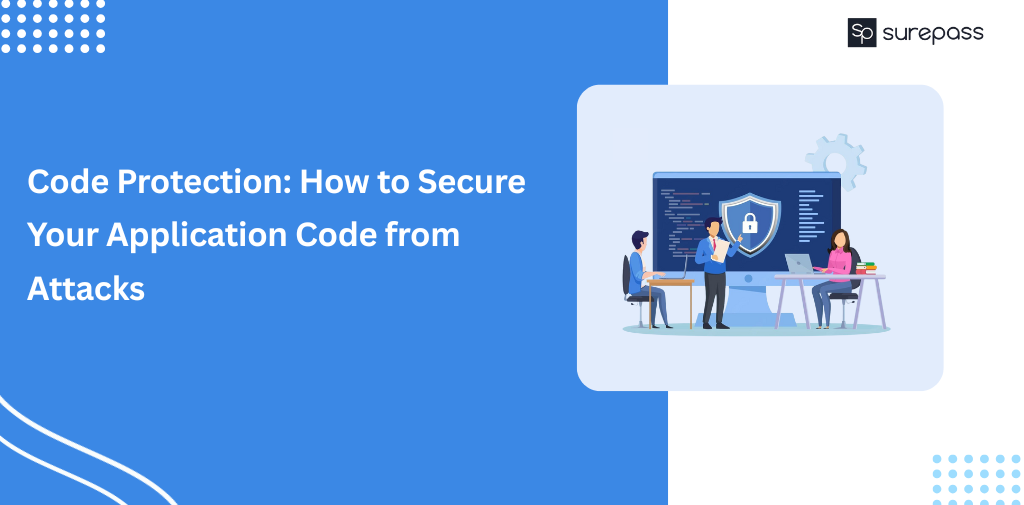
Source code is the most important component of the software. It is intellectual property losing it, which can lead to financial loss, data theft, and damage to reputation. Here, code protection helps in protecting this property. It helps businesses protect their sensitive information and digital assets from attacks. In this blog, you will learn about code protection, its importance, common threats, and the best tools.
What is Code Protection?
Code protection is a process of protecting source code with the help of tools and techniques. It protects the intellectual property of the company from data theft, unauthorized access, and misuse. It protects source code via obfuscation, encryption, environmental inspection, and policy.
Automate your KYC Process & Reduce Fraud!
We have helped 3000+ companies in reducing Fraud by 95%
Importance of Source Code Protection
Protection of Source code is essential for businesses:
- If your source code is protected, no business competitor or attacker can access it. Even in attempts, attackers cannot copy proprietary source code and the core business logic.
- It prevents reverse engineering that can expose security mechanisms, algorithms, and internal workflows.
- It protects sensitive data like API keys, credentials, encryption keys, and configuration details.
- It eliminates the risk of cyberattacks, fraud, and unauthorized access as it masks the critical core paths.
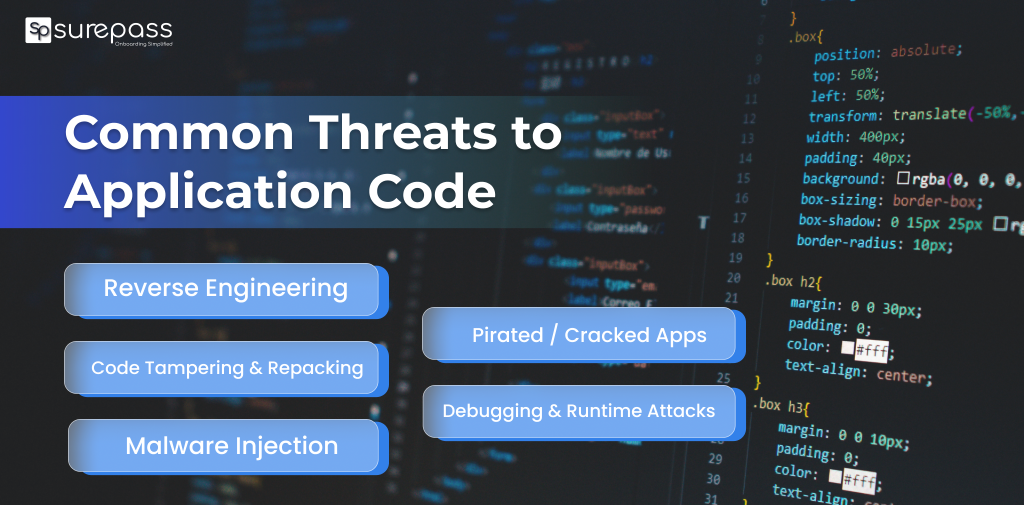
Common Threats to Application Code
These are the common threats to application code:
- Reverse Engineering Attacks
In this process, an attacker analyzes the compiled source code to know the logic and algorithms. Decompliers and dissemblers are used to extract source code binaries.
It exposes proprietary logic, encryption methods, API endpoints, and business. In short, it helps attackers steal intellectual property and facilitates easier exploitation.
- Code Tampering and Repacking
In code tampering, an attacker modifies or changes the behaviour of the app to bypass security checks or add a feature. The modified apps are used for data theft and fraud.
- Malware Injection
Attackers add malicious code to a legitimate application. It allows attackers to steal sensitive data, spy on users, redirect traffic, or conduct unauthorized transactions.
- Pirated or cracked Application
Pirated and cracked applications are illegally modified versions of the original software. These modified software don’t have licensing checks, subscriptions, or payments. These versions directly impact business, including revenue loss and damage to brand credibility.
- Debugging and Runtime Application
Attackers use debuggers, emulators, and hooking frameworks to change the behaviour of the app at runtime. It helps them bypass app authentication, modify API responses, or extract data from memory.
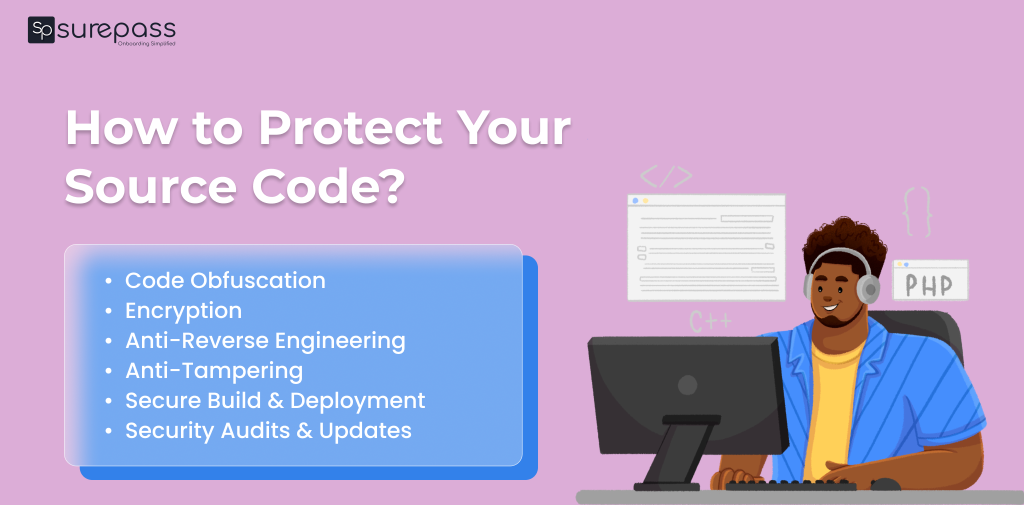
How to Protect Your Source Code?
Businesses can implement various methods to protect source code:
- The team can use code obfuscation to make the source code quite difficult to read and understand after compilation or decompilation.
- Apply encryption to protect sensitive strings, logic, API Keys, and credentials stored in the code.
- Integrate anti-reverse engineering techniques to detect and block debuggers, decompilers, and analysis tools.
- Implement anti-tampering checks to prevent unauthorized modifications or cracked versions.
- Secure build and deployment pipelines to prevent source code leaks during development and release.
- Regularly conduct security audits and updates to identify vulnerabilities and enhance code protection.
Best Tools for Application Code Protection
DeepID is a mobile app security solution, along with code and asset protection capabilities. It thoroughly analyzes and identifies the fraud attempts. It helps secure source code and digital assets from unauthorized access, theft, modifications, or misuse.
- This device intelligence solution detects reverse engineering attempts and unauthorized analysis of source code and binaries.
- Identifies exposure of sensitive assets like API keys, certificates, and configuration files.
- It identifies runtime threats such as debuggers, emulators, and malicious tools during app execution.
- It works across both the Android and iOS applications with consistent security monitoring.
- It continuously monitors threats with minimal impact on performance or user experience.
Apart from the code and asset protection, this all-in-one SDK offers many other key capabilities, including device fingerprinting, SIM binding, promo code abuse control, duplicate account detection, and more.
Checklist to Protect Code
Follow this checklist to protect your source code:
- Obfuscate all business-critical logic
Use advanced obfuscation to make it harder to read source code or copy it. This will reduce the chances of reverse engineering.
- Do not embed API keys and credentials in the source code
Do not add or embed API keys, credentials, or tokens in source code. It will stop attackers to extract these information via decompilation.
- Detect debuggers and hooking frameworks
Use tools to identify debugging tools, emulators, and runtime hooking frameworks.
Conclusion
Code protection is an essential step for all businesses. It helps prevent intellectual property theft, app modification, or alteration. The manipulated apps can cause financial loss, reputation, and data breaches. A business should implement various checks and tools to their workflow for protecting source code.
FAQs
Ques: What is Code Protection?
Ans: It is a process of protecting source code from unauthorized access, modification, and alteration.
Ques: How to protect source code from being copied?
Ans: You can protect the source code from being copied with
- Encryption
- Multi-Factor Authentication
- Obfuscate/minify code
- Auditing
Ques: Is there any method to protect your source code legally?
Ans: Yes, you can protect source code legally as intellectual property rights (copyrights, Patents, and Trade Secrets).
Ques: What are the best ways to protect mobile applications?
Ans: Mobile applications can be protected through secure code practice, app shielding, code obfuscation, and encryption.
Ques: What does an application protection policy include?
Ans: An application protection should include data security, access control, compliance, and threat detection.
Automate your KYC Process & Reduce Fraud!
We have helped 3000+ companies in reducing Fraud by 95%