




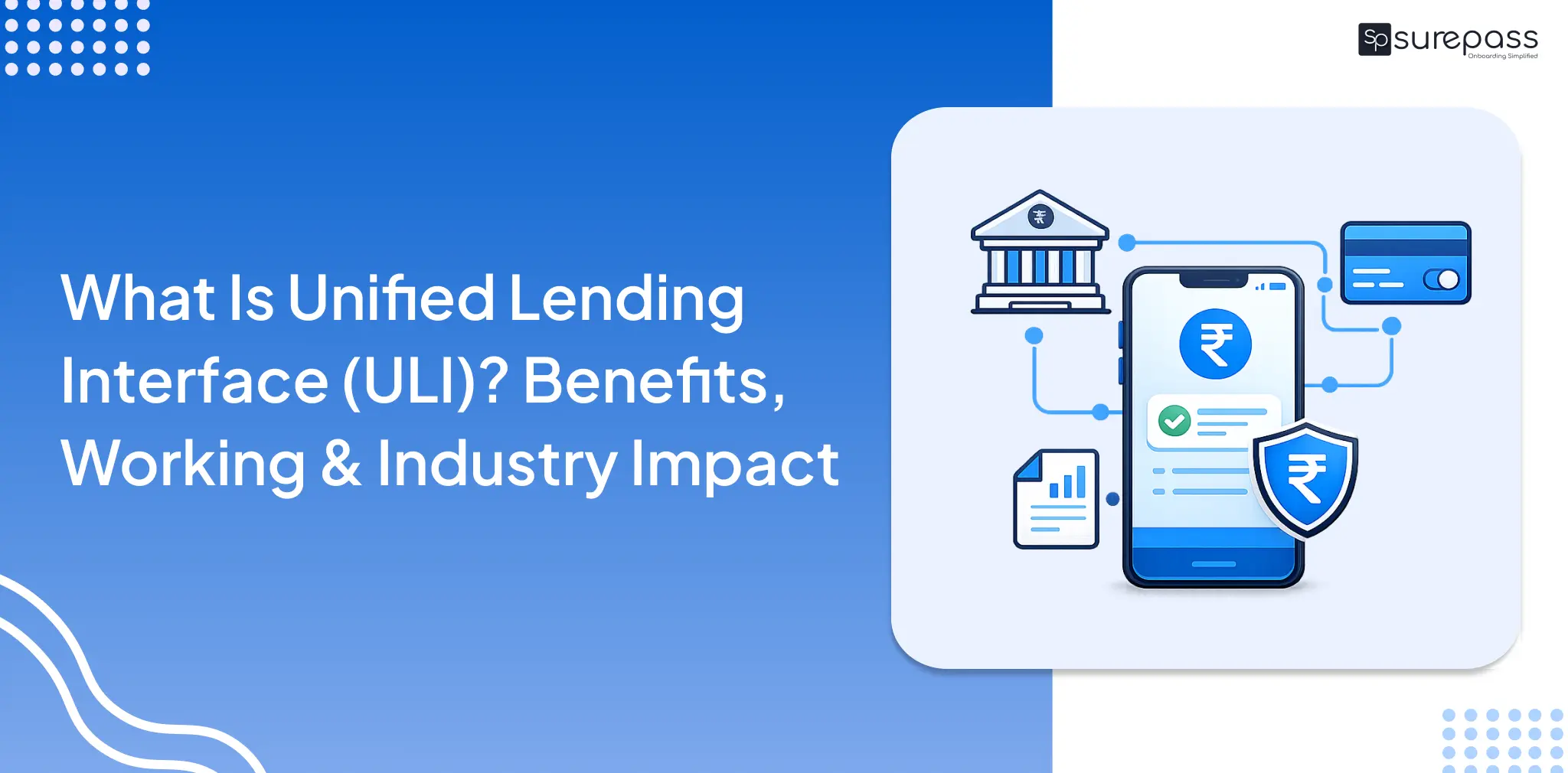
The Unified Lending Interface (ULI) is a digital platform launched by the RBI in an attempt to make credit more accessible than ever by bringing all the parties involved onto one platform, especially those who are underserved by the traditional banking system. This comes after understanding how small businesses and low-income individuals of the country still face numerous problems in securing credit.
How Does Unified Lending Interface Work?
Fintech solutions are supporting and accelerating India’s economic growth. The Unified Lending Interface (ULI) is trying to do for credit what RuPay did for payments. ULI wants to build a trusted, domestically scalable, and interoperable digital infrastructure for credit. ULI wants to standardize lender-borrower data and credit application processes to remove inefficiencies that have historically impeded cross-sector lending.
Automate your KYC Process & Reduce Fraud!
We have helped 3000+ companies in reducing Fraud by 95%
Basically, ULI is an all-encompassing digital credit platform designed to connect borrowers, lenders, and data providers within a unified, secure ecosystem. Thanks to standard APIs, data sufficiency and reliance on manual processes are optimally balanced, thus simplifying credit evaluations and reducing lenders’ operational costs, converting small-amount and short-term loans into viable business propositions.
Most importantly, ULI is designed with safety, consent, and simplicity in mind. Borrowers have control over their data, and lenders have seamless, reliable, and consistent access to verified data. When combined with the strong regulatory framework of the Reserve Bank of India, ULI can scale the digitization of credit to the broadest segments of Indian society. This will help MSMEs, farmers, first time borrowers, and improve India’s digital public services.
<
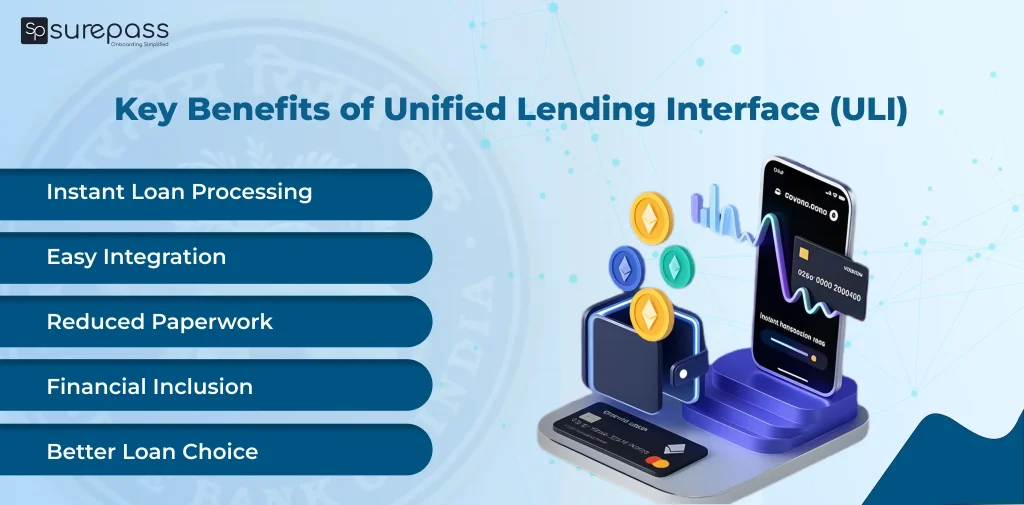
Benefits Of Using the Unified Lending Interface (ULI)
Unified Lending Interface or ULI works by connecting creditors to different data sources with borrower data obtained via consent, which allows it to do the following:
- Speeding up the loan process from days to minutes
ULI provides the lenders with a comprehensive profile of the borrower almost instantly and cuts down on a lot of tedious paperwork involved in traditional loan scenarios. - Standardize the process
Unified Lending Interface works using a standardized system i.e it can be used with existing systems.
- Market Expansion:
Lenders can reach underserved markets such as rural areas where organised credit is yet to become available using ULI, leading to a more diverse customer portfolio. - Transparency for borrowers:
ULI lets borrowers become aware of multiple credit options, which allows them to choose the right creditor for their needs and closer to their conditions.
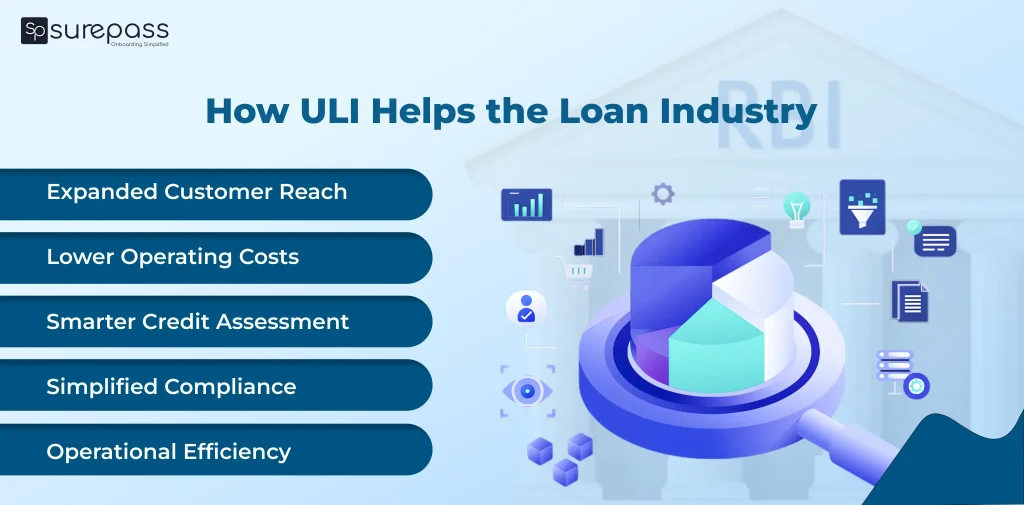
How Does ULI Help the Loan Industry?
Unified Lending Interface provides significant benefits for creditors:
- Customer Reach:
Creditors now have the capability to reach borrowers even in remote parts of the country using ULI. - Lower Cost of Operations:
ULI eliminates most of the manual work required to apply for a loan, unlike the traditional methods, making the process take less time and reducing the operational costs. - Credit Assessment:
Using ULI the creditors get a well curated profile making it easier for them to make the decision on approving/rejecting the application. - Ease of Compliance:
Thanks to the standardization ULI brings, all the procedures are done as per RBI’s guidelines making the chance of compliance based faults almost negligible.
Privacy Concerns With ULI
The Unified Lending Interface (ULI) works on a model where a borrower’s data can only be accessed with user consent. Also, data can only be accessed for a specific purpose, and borrowers have the right to view data and the access records related to it.
ULI complies with all the data protection rules and regulations in India, especially DPDPA 2023, which strengthens data privacy, security, and accountability. This means that borrowers have control over their personal data, enabling lenders to make decisions on user data while building confidence.
Final Thoughts
The Unified Lending Interface (ULI) is a notable improvement in India’s lending ecosystem. With fully compliant digital lending frameworks, standardised infrastructure, and a focus on consent, privacy and interoperability, ULI has the potential to increase the scale of access to credit while building and maintaining trust among lenders and borrowers.
With increased adoption of ULI, financial institutions will be able to efficiently extend their services to the previously unserved/underserved segments of the credit market, while borrowers will be able to enjoy access to credit that is more equitable and with faster credit decisions. Unified Lending Interface, if managed and implemented in a right manner, has the potential to strengthen the digital public infrastructure of India and aid the country in achieving the next phase of inclusive and sustainable economic growth.
To support your lending ventures please check out Surepass Unified Learning Interface API to streamline your data collection and verification process on a single platform.
FAQs
Ques: What is the Unified Lending Interface (ULI)?
Ans: The Unified Lending Interface (ULI) is a digital lending infrastructure launched by the Reserve Bank of India to make credit faster, more accessible, and more transparent. It connects borrowers, lenders, and data providers through standardized APIs using a consent-based data-sharing model.
Ques: How does the Unified Lending Interface (ULI) work?
Ans: The Unified Lending Interface works by allowing lenders to access verified borrower data—such as financial and non-financial records—through standardized APIs, only after user consent. This reduces paperwork, speeds up credit assessment, and enables faster loan approvals.
Ques: Who benefits the most from the Unified Lending Interface?
Ans: ULI primarily benefits MSMEs, farmers, first-time borrowers, and individuals in underserved or rural areas. These groups often lack formal credit history, and ULI enables lenders to assess them using alternative and verified data sources.
Ques: Is borrower data safe on the Unified Lending Interface?
Ans: Yes. ULI follows a consent-based and purpose-limited data access model and is aligned with India’s Digital Personal Data Protection Act (DPDPA), 2023. Borrowers retain control over what data is shared, who can access it, and for what purpose.
Ques: How is ULI different from traditional lending systems?
Unlike traditional lending systems that rely on manual documentation and fragmented data sources, ULI uses standardized APIs to create a unified digital ecosystem. This makes lending faster, more interoperable, compliant with RBI guidelines, and scalable across regions and borrower segments.
Automate your KYC Process & Reduce Fraud!
We have helped 3000+ companies in reducing Fraud by 95%