




OVSE, or (offline verification seeking entity), refers to the organization that has the authority to verify Aadhaar identity offline through QR code, e-Aadhaar, or the paperless Offline e-KYC XML file. These entities do not need to send a request to the CIDR (Central Identities Data Repository) database for verification. An entity can verify the Aadhaar authenticity by validating digital signatures embedded on the QR code and XML file. Organizations don’t even need to have a license; they just need to complete a formal registration. Here in this guide, you will learn about how an entity can become an OVSE.
Who can become an OVSE?
According to the UIDAI guidelines, any public, private, or non-governmental organization is eligible to become an Offline Verification Seeking Entity, provided it has a clear, lawful, and reasonable reason for conducting Aadhaar verification offline.
- Banks, NBFCs, and Microfinance Companies
- Insurance companies and brokers
- Telecom operators
- Digital Lending Platforms
- HR, Staffing, and Background Verification Companies
- EdTech and Universities
- Healthcare Providers and Hospitals
- Logistics and e-Commerce platforms
Automate your KYC Process & Reduce Fraud!
We have helped 3000+ companies in reducing Fraud by 95%
Pre-Requisite Before Applying for OVSE Status
To become an offline verification-seeking entity, the organization must:
Provide a Clear Requirement
An organization needs to provide reasons why it needs offline verification, such as:
- Customer Onboarding
- Fraud Reduction
- KYC for Financial Services
- Employee Onboarding
- Verification for government benefits
Documents Required to be an Aadhaaar OVSE
These are the documents a company must have to become an Offline verification-seeking entity:
- Certificate of Incorporation/Registration
- Company Profile
- Letter of Authorization
- Self-declaration on adhering to the Aadhaar Act, compliance with UIDAI regulations, lawful purpose, etc
How to Become an Aadhaar OVSE (Offline Verification Seeking Entity) in India (Step-by-Step Process)?
An organization should be eligible and have the required documents to apply for the OVSE. After that, it needs to follow the steps below:
- Submit Online Application
- Sign the Agreement with the UIDAI
- Complete the technical integration with the Aadhaar App.
- Pay Nominal Fee
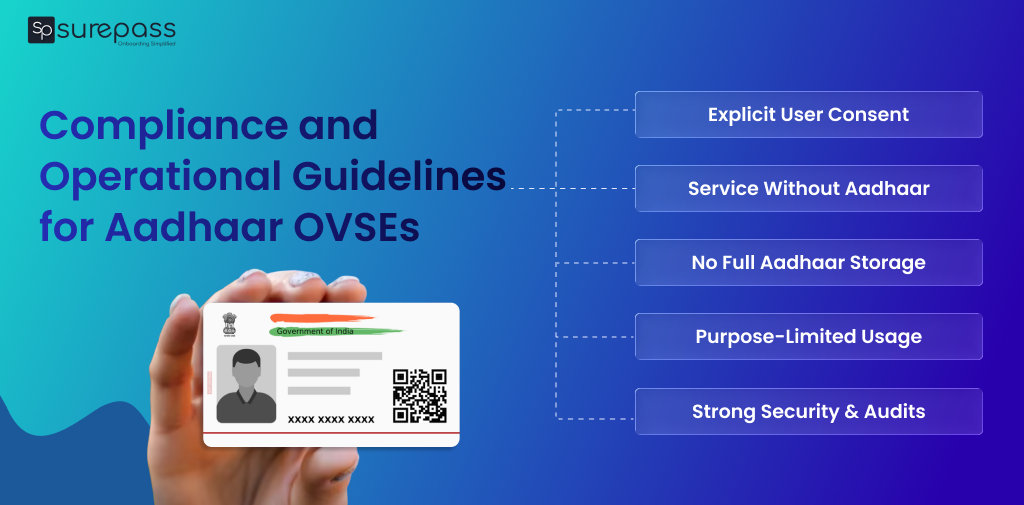
Compliance and Operational Guidelines for Aadhaar OVSEs
An OVSE should follow these guidelines:
- Obtain Explicit Consent Before Every Verification
All the offline verification-seeking can perform OKYC after getting the clear and informed consent of an individual. The consent should provide the reason why verification is required, what information is going to be accessed, and how the Aadhaar information is going to be used. The user has the right to accept or reject the request.
- Provide Service Even If Aadhaar Verification is Declined
A resident has the right to decline Aadhaar-based verification. If an Aadhaar holder doesn’t want to go with offline verification, then the organization can offer an alternative identity verification method. The organization cannot deny giving service to the Aadhaar holder just because the Aadhaar was not provided.
- Do Not Store Full Aadhaar Numbers
According to the UIDAI rules, an offline verification seeking entity must follow the strict data minimization and masking protocols. An entity can not store the full Aadhaar number and share it for verification. In case the storage is required due to a genuine reason, they need to use the reference number or masked Aadhaar. It will prevent the misuse.
- Use Aadhaar Information Only for Intended Purpose
The demographic information shared by the Aadhaar holder should be used for the intended purpose. This information cannot be used for any other unrelated activity. The organization can’t share information with a third party. After verification, the information should be deleted and not be stored.
- Maintain Strong Security and Audit Controls
OVSE should use a secure storage system to prevent unauthorized access to Aadhaar-related data. Encryption should be applied to data at rest and in transit. It maintains tamper-proof audit logs, and it helps track every Aadhaar verification activity. The entity should conduct periodic compliance and internal audits.
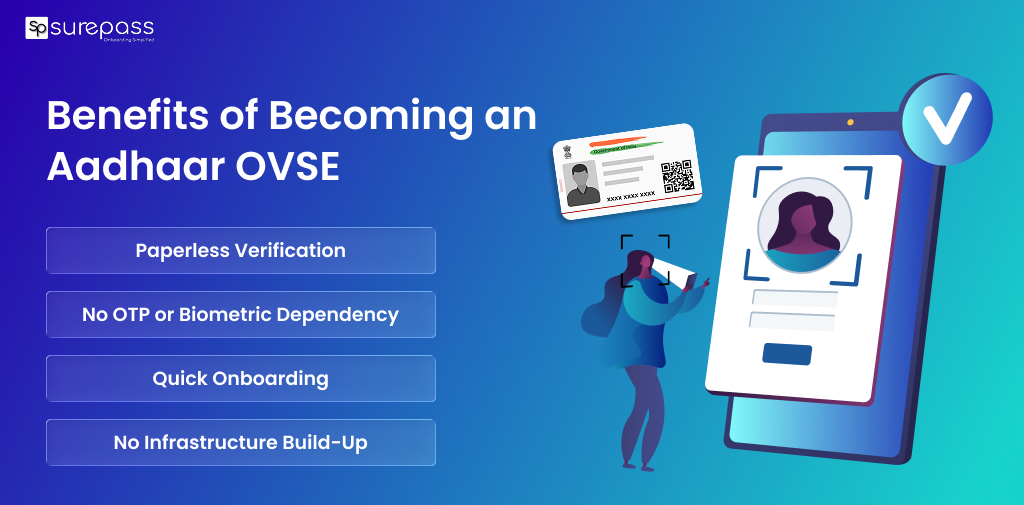
Benefits of Becoming an Aadhaar OVSE
These are the benefits an organization gets:
- Paperless Verification
It allows an organization to verify Aadhaar identity digitally without collecting and verifying any physical documents or photocopies.
- No OTP or Biometric Dependency
Verification can only be done through codes or through XML files. It eliminates the dependency on the OTP or biometric verification.
- Quick Onboarding
The OKYC process is a quick way of verification and reduces the operational burden, which makes customer onboarding quick and efficient.
- No Need to Build Technical Infrastructure
As AUA and KUA entities, the OVSE doesn’t have to build complex infrastructure for verification.
Surepass Your Reliable TSP for OVSE
Surepass is a reliable TSP for Offline verification seeking entities that removes the technical complexity required for OKYC. It offers advanced Aadhaar OKYC solutions for QR code scanning, offline XML file verification, consent management, masking, and audit logging. Organizations don’t need to build and maintain own system.
Conclusion
Any registered entity can become an Aadhaar OVSE if it has the legal requirements and documents. A company must have a valid list of reasons for verification for service delivery. The organization must have a Certificate of incorporation/registration, a letter of authorization, and a self-declaration on adhering to the Aadhaar Act. The company needs to complete the registration process through the portal. Kindly follow the above step-by-step guide. Being an Aadhaar OVSE gives an advantage in conducting quick offline verification. However, they must follow the compliance guidelines to avoid penalties and legal troubles.
FAQs
Ques: Can OVSE perform Aadhaar verification without the explicit consent of the Aadhaar number holder?
Ans: No, consent is required to conduct offline verification.
Ques: Can an OVSE store Aadhaar Data after verification?
Ans: No, OVSE should avoid storing Aadhaar information. If necessary, they must use masked details.
Ques: Is biometric authentication required for offline Aadhaar verification?
Ans: Yes, biometric authentication is required for offline Aadhaar verification.
Ques: Is Aadhaar offline verification legal in India?
Ans: Yes, Aadhaar offline verification is legal in India.
Ques: What forms of Aadhaar can be used for offline verification?
Ans: e-Aadhaar, QR, and Aadhaar XML file can be used for offline verification.
Ques: Can an OVSE verify the authenticity of Aadhaar without connecting to UIDAI?
Ans: Yes, OVSE can verify Aadhaar by validating UIDAI digital signatures present on QR code and XML file.
Automate your KYC Process & Reduce Fraud!
We have helped 3000+ companies in reducing Fraud by 95%