
e-Signing makes the document signing process easy and reduces manual delays. However, the OTP verification process is prone to fraud and Aadhaar-linked mobile issues (As there are still many people who have not yet linked their Aadhaar and mobile number). The Aadhaar Face eSign resolves this issue. It allows Aadhaar holders to eSign a document through Aadhaar-based verification. Here in this blog, you will learn about the SureSign Face eSign solution and how to eSign a document with it.
What is Aadhaar Face eSign?
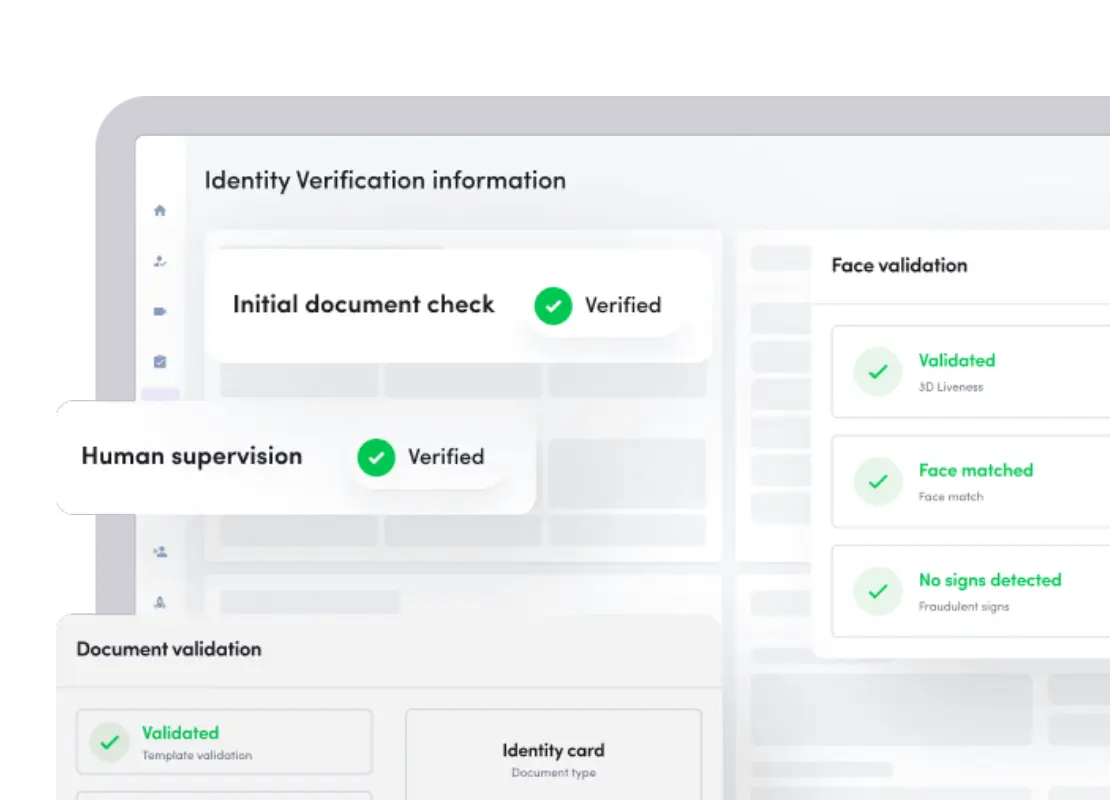
Aadhaar Face eSign is a process of singing document through the facial verification process. After the successful verification, the electronic signature is applied to the document.
SureSign is an AI-powered document signing platform that offers an eSign solution to sign documents digitally for businesses.
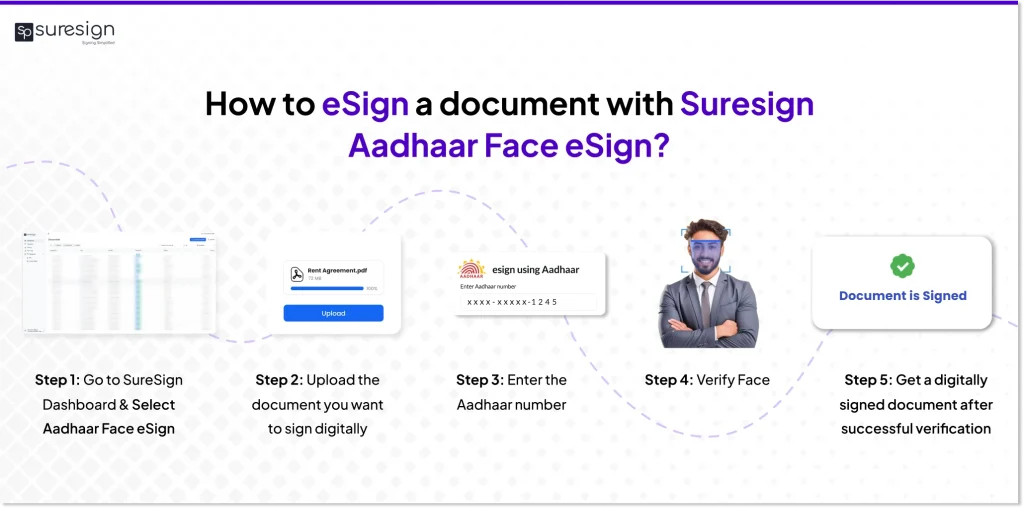
How to eSign a document with Suresign Aadhaar Face eSign?
Here we are sharing the workflow of Suresign Aadhaar Face eSign:
- Go to SureSign Dashboard
- Select Aadhaar Face eSign
- Upload the document you want to sign digitally
- Enter the Aadhaar number
- Verify Face
- Get a digitally signed document after successful verification
Automate your KYC Process & reduce Fraud!
We have helped 3000+ companies in reducing Fraud by 95%
What are the Benefits of Aadhaar Face eSign?
These are the benefits:
- Reduces Identity Fraud: Face authentication and liveness detection help businesses prevent fake identities, impersonation attempts, and unauthorized document signing.
- Faster Customer Onboarding: Customers can complete the verification and document signing quickly without lengthy manual checks or branch visits.
- Several Operational Costs: Organizations can reduce costs associated with paper handling, printing, courier services, and manual verification.
- Secure Remote Verification: Businesses can sign on and verify users remotely while maintaining compliance and authentication standards.
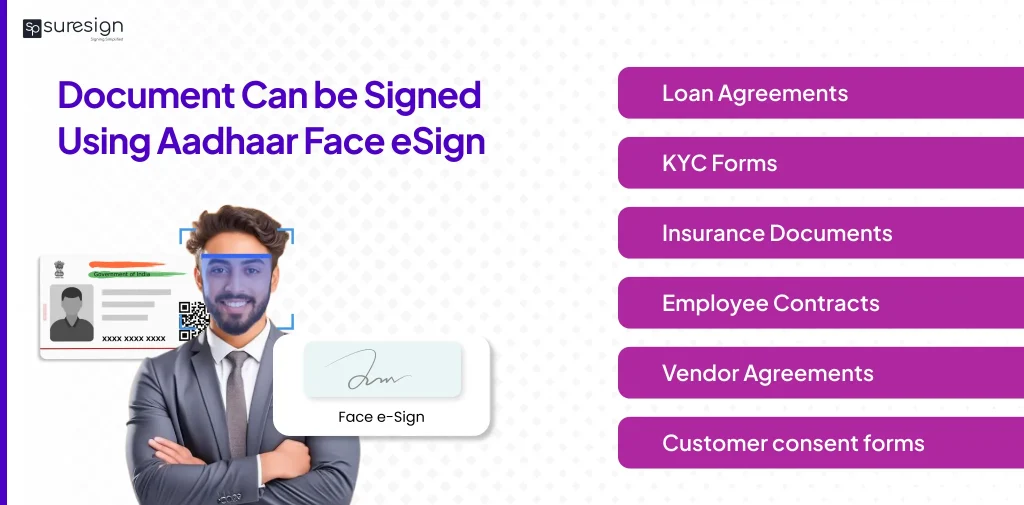
What document can be signed using Aadhaar Face eSign?
Businesses can sign various kinds of documents including:
- Loan Agreements
- KYC Forms
- Insurance Documents
- Employee Contracts
- Vendor Agreements
- Customer consent forms
Why is Aadhaar Face Sign better than OTP based signing?
Both OTP and face-based verification can be used for digital document signing. However, the face-based signing is considered better because of the authentication method, security level, fraud prevention, convenience, and remote accessibility.
In OTP based signing, the OTP is sent to the registered Aadhaar-linked mobile number. However, in face eSign facial verification is used for signing. The Aadhaar-based eSign provides adds extra security to the document signing process.
Aadhaar Face eSign vs OTP Based eSign
| Feature | OTP Based eSign | Aadhaar Face eSign |
| Authentication | OTP on mobile | Facial Verification |
| Fraud Risk | Higher | Lower |
| Aadhaar-linked mobile required | Yes | No Dependecy |
| User Convenience | Limited network issue | Faster and smoother |
| Security Level | Moderate | High |
| Remote Signing | Yes | Yes |
Why Face eSign is better than Physical Signing?
It is better than the physical signing process because it eliminates physical documentation signing work and also reduces the risk of document fraud. Face verification confirms that the signer is physically present during the signing process. It also prevents document tampering that can occur during the manual processes.
Is Aadhaar Face eSign Legally Valid?
It is legally valid under the IT Act, 2000. It uses Aadhaar-based authentication approved by UIDAI. eSigned documents are legally valid in court and can be used for almost all document signing processes.
Industry Applications of Aadhaar Face eSign
Aadhaar face eSign is widely used for various purposes:
- Banking and NBFCs: Banks and NBFCs can be used for it for loan agreements, account opening, forms, consent forms, and KYC documentation. It speeds up onboarding, which reduces fraud risks.
- Fintech Platforms: Fintech companies can integrate the solution for document signing. It helps with digital onboarding, lending approvals, investment account activation, and secure customer verification.
- Real Estate Businesses: Real Estate companies can use online signing for rental agreements, property booking forms, buyer agreements, and verification documents.
- Healthcare Organizations: Healthcare organizations and health tech platforms use it for patient consent forms, insurance approvals, and medical documentation.
Why Businesses Prefer Face eSign for Remote Onboarding?
Businesses are shifting towards e-signature because it helps in faster agreement execution, reduces customer drop-offs, enhances user experience, and eliminates paper-based documentation. It reduces operational burden and helps reach a wider audience.
Conclusion
Document e-Signing is the preferred method of business for document signing. The Aadhaar-based eSign is a legally valid and streamlined document verification process. The SureSign offers the Aadhaar eSign solution, including the face eSign solution. It streamlines the document signing process with various features, including diverse documents, adaptable deployment, remote accessibility, and legal validity.
FAQs
Ques: What is the Aadhaar Face eSign?
Ans: It is a digital document signing process that uses Aadhaar-based facial authentication to verify the signer’s identity.
Ques: Is Aadhaar Face eSign legally valid in India?
Ans: Yes, it is legally valid under the IT Act, 2000.
Ques: Is an Aadhaar-linked mobile number required for face eSign?
Ans: No, it depends on facial authentication.
Ques: What documents can be signed using Aadhaar Face eSign?
Ans: Businesses can use it for loan agreements, KYC forms, insurance documents, employee contracts, etc.
Ques: What is the difference between OTP eSign and Aadhaar Face eSign?
Ans: OTP eSign uses OTP for verification, whereas face eSign uses face verification for document signing.
Automate your KYC Process & reduce Fraud!
We have helped 3000+ companies in reducing Fraud by 95%